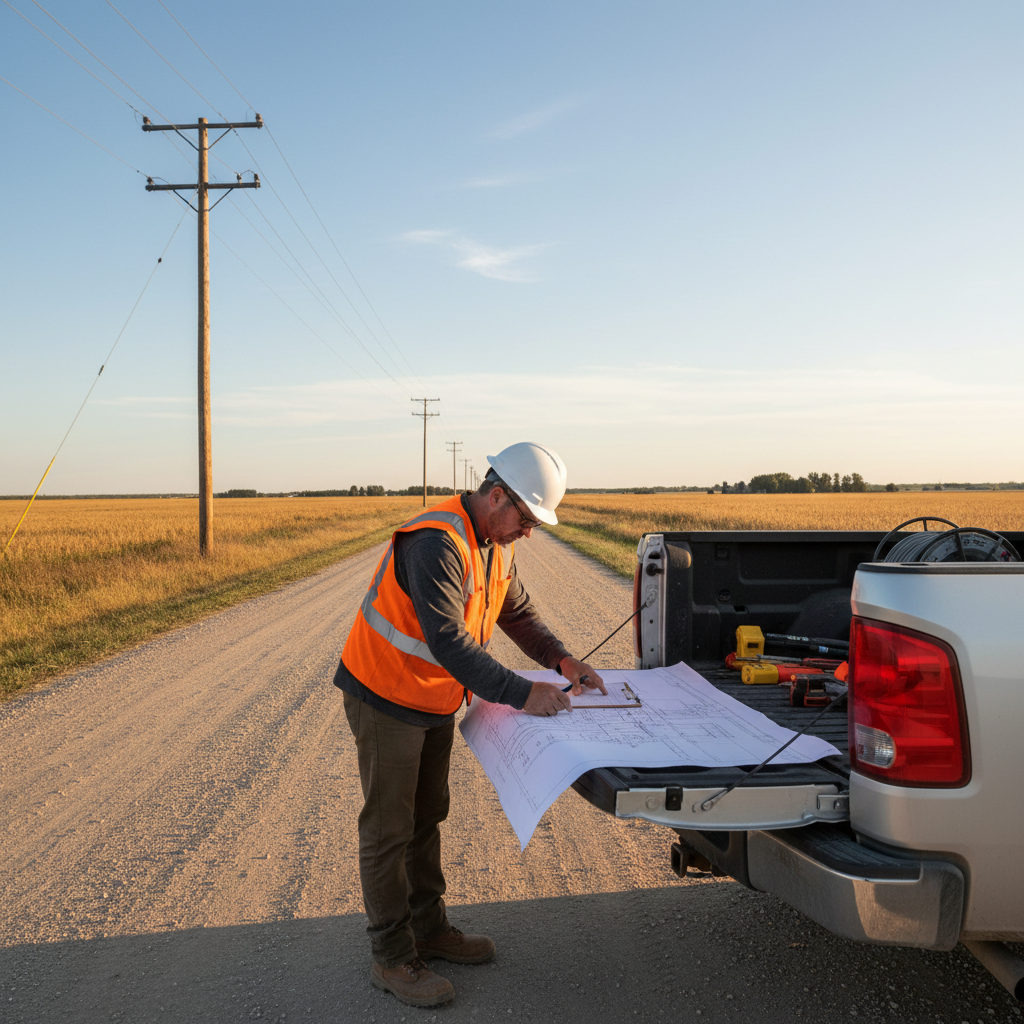
It has been a year since the federal government restructured the BEAD program, and a large number of states still cannot touch the money. No approvals. No deployment timelines. No work orders hitting your phone.
The Broadband Breakfast report from August 2026 confirms what many telecom contractors already feel in their bones: the federal promise to speed up deployment has not matched the pace on the ground. States are still waiting on federal approvals before a single shovel goes in the dirt or a strand gets pulled.
What BEAD Approval Actually Means for Your Pipeline
BEAD stands for Broadband Equity, Access, and Deployment. It is the $42.45 billion federal program run by the NTIA (National Telecommunications and Information Administration) that funds last-mile broadband buildout. Before any deployment work starts, states must get their plans approved by the NTIA. That approval is the gate. No approval, no work.
If your ISP customers are banking on BEAD-funded projects, and those states have not cleared approval, the work is not coming in Q3 or Q4 of 2026. It may not come until 2027. That is the honest read.
Here is the call you have to make: do you hold crew capacity in anticipation of BEAD work, or do you redirect that capacity toward non-BEAD revenue now?
The States Still Stuck Are Not Outliers
Broadband Breakfast has not published a state by state list, so treat any name you hear as unconfirmed until the state broadband office says so. What the reporting makes clear is that the approval bottleneck is widespread, not isolated to one or two slow movers.
I have seen this play out before. A contractor holds two crews on standby for a project that keeps sliding right. Three months in, those crews are half-utilized. DSO climbs because you are paying labor without invoicing volume to match. Working capital tightens. The line of credit starts doing work it should not have to do.
That is the quiet version of how BEAD delays hurt telecom contractors. Not a dramatic collapse. Just a slow bleed on crew margin and cash position.
What You Can Do While States Wait on Approval
First, audit which of your current ISP customers have BEAD-dependent projects in their backlog. Ask them directly: is this work contingent on state approval? If yes, get a realistic timeline from them, not an optimistic one.
Second, look at your AR aging report today. If BEAD delays are already pushing project starts, your receivables on current work need to be tight. You cannot afford slow collections and a soft pipeline at the same time.
Third, identify non-BEAD revenue lanes. Private ISPs running their own capital programs, cellular carrier infrastructure work, and enterprise fiber builds do not sit behind the BEAD approval gate. Every crew that has capacity deserves a revenue path that does not require a federal agency to move first.
Fourth, if you are in a state that has received BEAD approval, get in front of the subgrantees now. A subgrantee is the ISP or entity that receives BEAD funds from the state and then builds the network. They are your actual customer in the BEAD chain. The contractors who have relationships with subgrantees before the awards finalize will get the calls first.
The Longer View on BEAD Timing
The BEAD program will deploy. The money is real. The need is real. But the federal process is slower than any press release has ever admitted, and that gap costs telecom contractors real dollars while they wait.
The operators who come out ahead will be the ones who did not let optimism about BEAD stop them from building revenue elsewhere in 2026. Keep your crews working. Keep your AR clean. And stay close to the states that are actually moving.
Every week in The Splice, we track where the BEAD approvals stand and what it means for contractor pipelines. If you are not subscribed, you are reading the news a week late.
The contractors who survive the wait are the ones who never stopped selling while they were waiting.
Get BEAD updates before the trade press writes them up.
The Splice decodes federal funding intel for crews and ops, not policy folks. Action items, not summaries. One five-minute read a week. Free.
Get this coverage first in Google