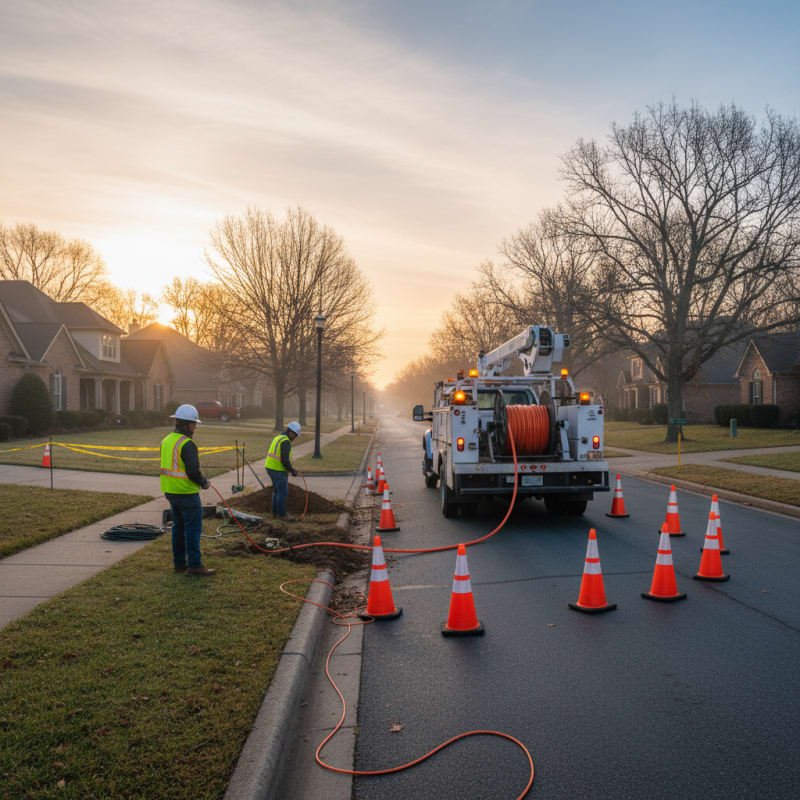
AT&T is on pace for its biggest fiber build year ever. The company expects to add 7 million fiber passings by year's end, and it is also launching a direct-to-device satellite service before December. If you run crews that do aerial or underground fiber work for regional ISPs, this number tells you something important about where labor demand is moving.
What 7 Million Passings Actually Means on the Ground
Seven million passings is not an abstract figure. Break it down. AT&T is averaging roughly 135,000 new passings per week across its footprint. That is conduit pulled, strand hung, splicing done, and drops stubbed. Every passing represents labor hours. Most of that work flows through a contractor layer before it ever reaches AT&T's direct workforce.
The scrapped article body means we do not have the full quote or regional breakdown from AT&T's announcement. What we do know from the headline and excerpt: this is their biggest fiber year on record, and the satellite launch is a separate line of business that does not replace the fiber build.
Here is what that pace signals for your pipeline: AT&T's tier-one build drives secondary demand. Regional ISPs competing in adjacent markets accelerate their own deployments to stay relevant. That is the work that lands on your desk.
The Contractor Decision This Creates Right Now
If AT&T is pulling this volume of fiber, their Tier 1 contractors are stretched. Tier 1 contractors hire and they subcontract. Telecom contractors running 10 to 20 crews in AT&T-active markets have a window right now to get in front of those primes with a clean capacity story.
This is the call you have to make: do you position your company as overflow capacity for a large prime working an AT&T contract, or do you go upstream and bid direct to regional ISPs who are responding to AT&T's build pressure with their own accelerated schedules?
Neither path is wrong. But they require different conversations this week. The prime path needs a capability statement and a current COI packet. The direct ISP path needs a project reference and a crew availability window you can actually defend.
Watch Your Working Capital Before You Commit
Big build years sound like good news. They are, but only if your back office can carry the load. A large AT&T-adjacent contract means 45 to 60 day payment cycles minimum. If your line of credit is thin and your AR aging is already stretched, taking on two new crews of work without addressing DSO first puts you in a cash hole by Q4.
I have seen this play out with aerial contractors in the Southeast who landed the work but ran out of float by month three. The revenue was real. The cash was not there yet. That gap is the risk.
Before you chase the pipeline that AT&T's build pace opens up, run your current DSO. If it is above 45 days, fix that first. A new contract on a broken billing cycle makes the problem bigger, not better.
The Satellite Line Is Not Your Business Yet
AT&T's direct-to-device satellite launch is worth watching but it does not change your immediate decisions. Satellite serves low-density rural coverage. It does not replace the fiber-to-the-home build that employs your crews. Do not let the satellite headline distract you from the fiber number, which is the one with real near-term stakes for your operation.
AT&T has not published regional priorities for the buildout. As those come out through Q3 earnings calls and partner announcements, the regional picture will sharpen. Keep your contacts at regional primes warm now, before the work is formally posted.
If you want the weekly read on where broadband build money is moving and what it means for your crews, The Splice lands every week. Built for telecom contractors running real operations, not policy watchers.
A record build year at the top of the market opens doors two layers down, but only for contractors whose back office can handle the float.
Get BEAD updates before the trade press writes them up.
The Splice decodes federal funding intel for crews and ops, not policy folks. Action items, not summaries. One five-minute read a week. Free.
Get this coverage first in Google