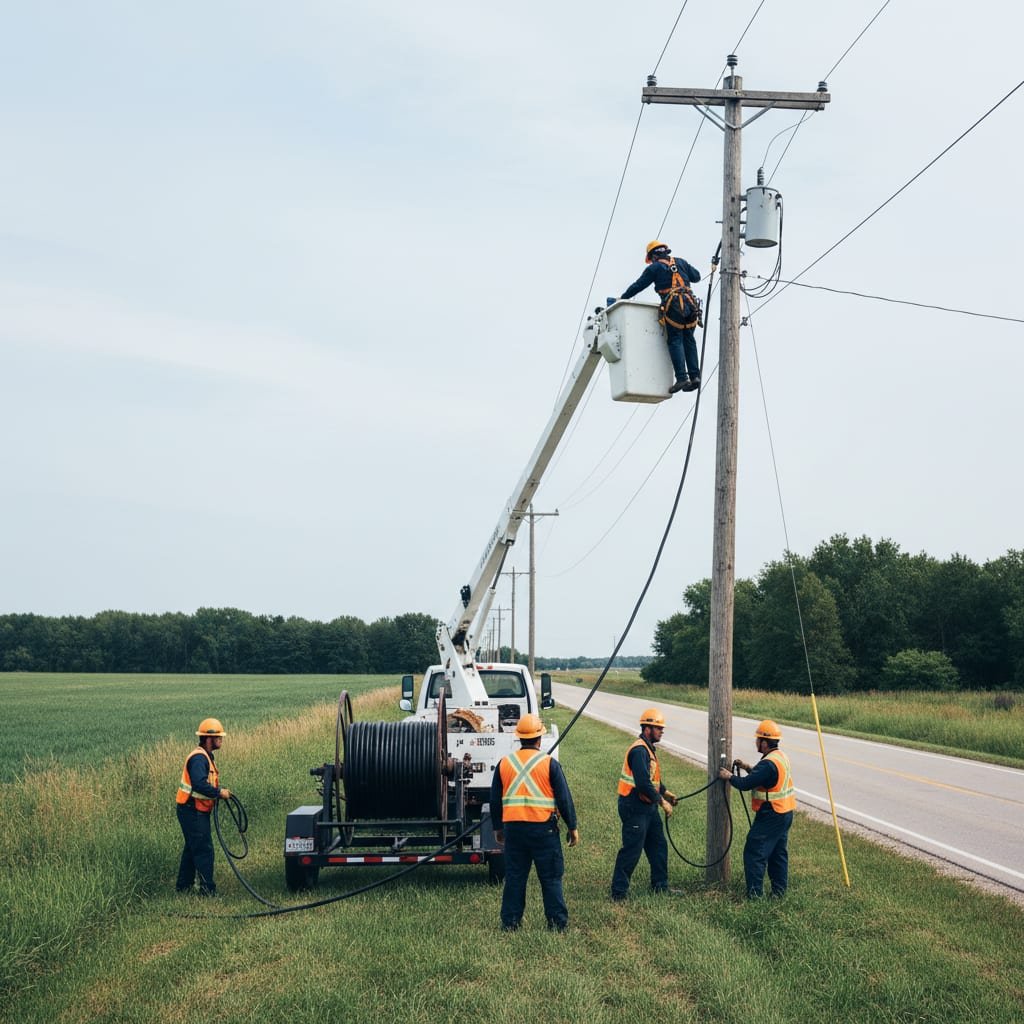
T-Mobile's $2 billion deal to acquire Oak Hill fiber assets is sitting in federal review. The FCC has said it won't touch the underlying license applications until Team Telecom finishes its probe. That review has no published deadline. For telecom contractors who were watching that deal for work, the clock is now someone else's.
What Team Telecom Actually Does (And Why It Can Slow Everything)
Team Telecom is a interagency group. It includes the Department of Justice, the Department of Defense, and the Department of Homeland Security. When a foreign ownership or national security question touches an FCC license application, Team Telecom steps in. They can ask for more information, negotiate security agreements, or recommend denial. There's no hard statutory deadline forcing them to finish fast.
The FCC won't approve or transfer the licenses while that review is open. That's the freeze. A $2 billion deal sitting on ice because a federal committee hasn't signed off.
The Pipeline Question on Your Desk Right Now
If you're a telecom contractor in a market where Oak Hill has built or where T-Mobile has announced fiber ambitions, here's the call you have to make: do you plan around this work, or do you hold?
These reviews can take months. Some stretch past a year. Large acquisition deals often include post-close construction ramp-ups, meaning contractor pipeline doesn't materialize until after the deal closes and the new owner sets its deployment plan. Push the close date out by six months, and your crew utilization forecast moves with it.
If you've already had conversations with project managers connected to this deal, get clarity on their internal timeline assumptions. Don't plan Q4 crew capacity around work that requires a federal committee to finish first.
What Contractors Miss About Big Fiber M&A
Every time a large fiber deal gets announced, contractors start counting potential drops and strand miles. That math isn't wrong. But the deal closing is only the first gate. After close, the acquirer has to set a build strategy, align vendors, and issue scopes. That process takes time even when everything goes smoothly.
A deal in federal review hasn't closed yet. It may close with conditions attached, including security agreements that could shape how the network gets built and by whom.
I've seen this play out with contractors who staffed up anticipating a post-acquisition build ramp, then spent two quarters carrying overhead while the deal worked through regulatory review. The work eventually came. But the timing gap hit their working capital hard. DSO doesn't care about your pipeline projections.
The Move While You Wait
You don't stop building your business while T-Mobile and the feds sort this out. Here's what makes sense right now.
- Keep this deal in your pipeline tracker, but flag it as contingent on close. Don't let it count toward committed revenue.
- If regional ISPs in your market are running BEAD-funded builds, that work has its own timeline and doesn't depend on this review. That's where your crew capacity is better positioned short-term.
- Track the FCC docket. When Team Telecom completes its review, the FCC will act on the license applications. That's your early signal the deal is about to close and the build planning will start.
One Principle Worth Keeping
Big deals create real work. But federal review timelines are outside your control. Position your crew around the work you can confirm, and watch the docket on the work you can't.
Plan your crews around confirmed work. Watch the docket for everything else.
If you want a weekly read on what's moving in broadband policy, contractor cash flow, and crew strategy, subscribe to The Splice. It goes out every week to telecom contractors running crews in the field.
Get BEAD updates before the trade press writes them up.
The Splice decodes federal funding intel for crews and ops, not policy folks. Action items, not summaries. One five-minute read a week. Free.
Get this coverage first in Google