Michigan just signed 17 subgrants under the federal BEAD program. Nearly $1.5 billion in public and private money is now committed to connect roughly 200,000 locations. That's not a rumor or a draft. That's ink on paper, which means build timelines are real and crew demand is coming.
What a Signed Subgrant Actually Means for Your Pipeline
BEAD, short for Broadband Equity Access and Deployment, is the $42.5 billion federal program run through the NTIA. Michigan's subgrants go to ISPs and local entities, called subgrantees, who now carry legal obligation to build. They can't sit on the money. They have to deploy. That means they need crews, and they need them under contract before ground breaks.
Michigan signing 17 of these agreements in one move is a signal. The state is past the planning phase. Subgrantees are now under the clock.
If you run crews in Michigan or in neighboring states like Indiana, Ohio, or Wisconsin, this is the question on your desk this week: are you already talking to the ISPs holding these subgrants, or are you waiting for an RFQ to hit your inbox?
200,000 Locations Is a Lot of Trucks on a Lot of Roads
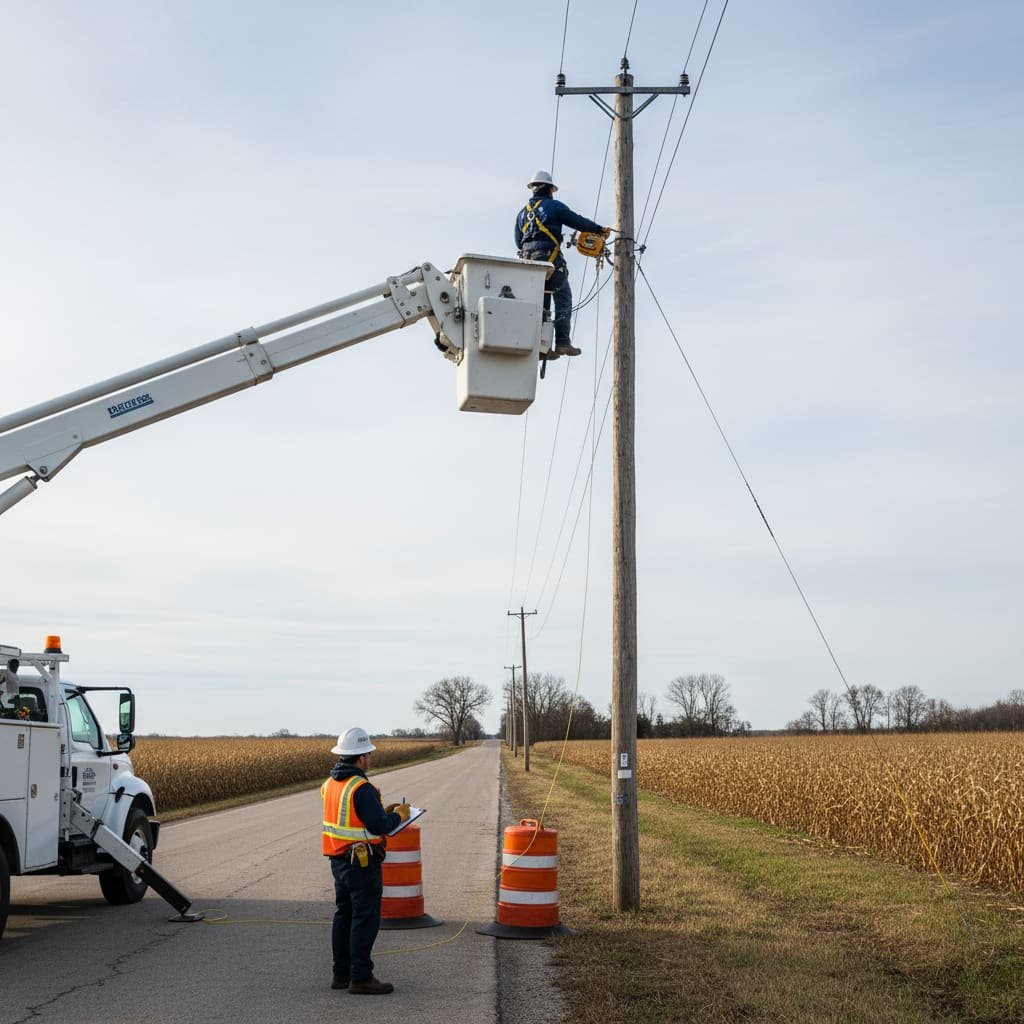
Think about what 200,000 passings actually takes. Underground bore work, aerial lashing, drop installs, splice points. Each of those phases needs a contractor. Subgrantees don't self-perform at that scale. They hire out.
The contractors who land this work won't be the ones who sent the best bid in response to a cold RFQ. They'll be the ones who had a conversation with a project manager months before the RFQ posted. The awards tend to go to contractors already in the room.
How to Position Before the Contracts Get Locked
You don't need a lobbyist. You need a list and a phone.
- Pull the subgrantee names from Michigan's broadband office. The Michigan High-Speed Internet Office, called MIHI, administers the state's BEAD program. Their awarded entity list is public or will be shortly.
- Find the VP of construction or the network build lead at each subgrantee. That's your contact, not the procurement department.
- Lead with capacity. Tell them how many crews you run, what you've built, and where. A 12-crew aerial contractor with 80,000 drops installed speaks for itself.
- Ask about their build schedule and pre-qual requirements now, before they publish them.
The worst outcome here isn't losing a bid. It's not being on the list when the bid goes out.
Watch Your Working Capital Before You Say Yes
BEAD-funded work is government-backed, but the payment cycles still run through the subgrantee. That means invoices can sit 45 to 60 days. On a large state program, mobilization costs hit before the first draw. If you're running tight on your line of credit, a big BEAD contract can squeeze your working capital fast.
Before you commit to mobilize for a 50,000-location build, know your DSO (days sales outstanding) and know what your bank will advance. Picture an aerial contractor who signs a BEAD-adjacent contract without modeling the cash gap and needs an emergency credit line increase a few months in. Don't let that be your story.
Run the numbers first. Then sign.
The Move Right Now
Michigan's 17 subgrants are live. The $1.5 billion is committed. The subgrantees are building their vendor lists today, not next quarter.
If you're in range of Michigan, get on the phone this week. If you're not, watch your own state's broadband office for the same signal. Michigan is ahead of many states on subgrant execution.
The Splice tracks BEAD execution state by state. Subscribe below to get the contractor-focused breakdown each week before the general market catches up.
The contractors who win BEAD work are already in conversation before the RFQ posts.
Get BEAD updates before the trade press writes them up.
The Splice decodes federal funding intel for crews and ops, not policy folks. Action items, not summaries. One five-minute read a week. Free.
Get this coverage first in Google