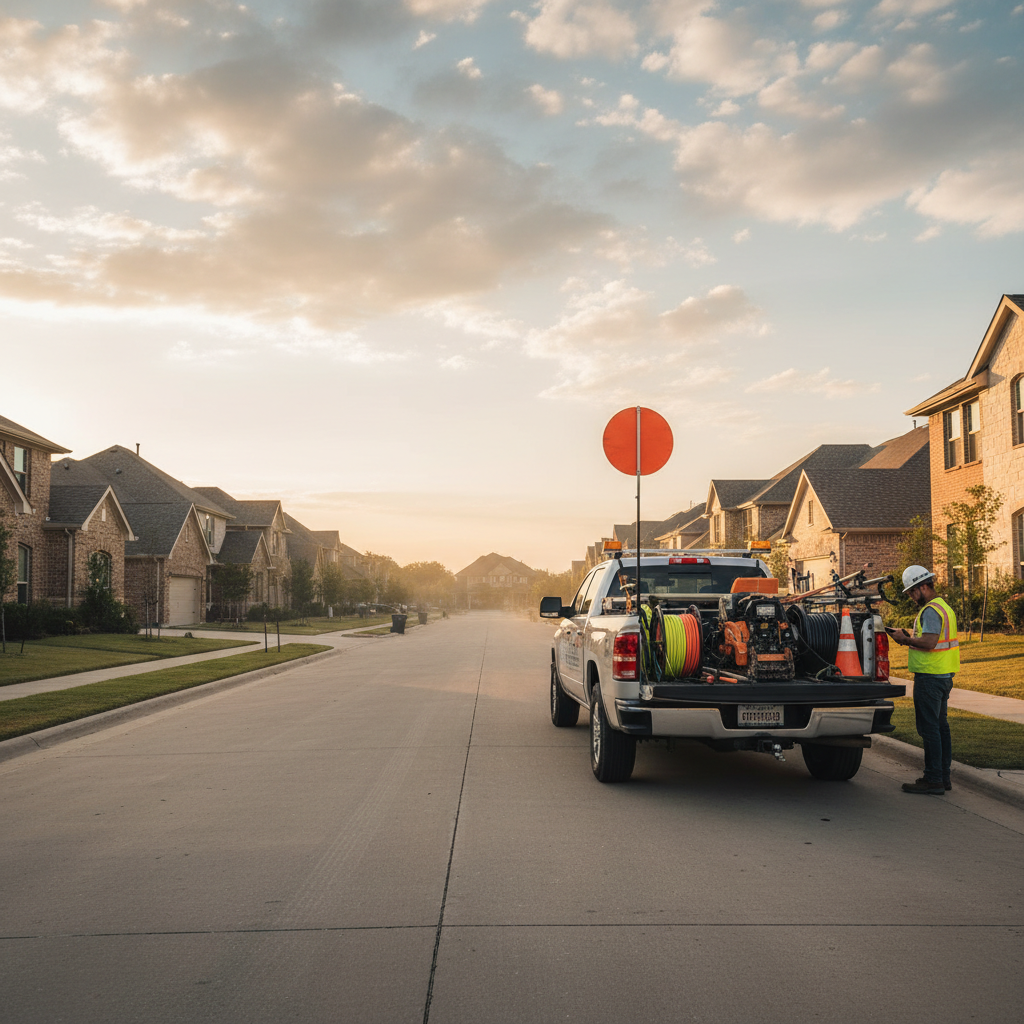
Fiber is live in Hazelwood, one of Frisco's newer communities near FM 423 and Rockhill. That is not a press release milestone. That is a signal about where active construction dollars are moving in the DFW metro right now.
The Fiber Broadband Association flagged this rollout in early June 2026. The provider, the crew counts, and the contract structure have not been made public. What is confirmed is that a community-scale fiber deployment is either complete or approaching completion in Frisco, Texas.
Why a Single Subdivision Matters to Your Crew Calendar
Hazelwood is not a standalone job. Frisco is one of the fastest-growing cities in the country by population. Developers and ISPs do not run fiber to one subdivision and stop. They run it to one, prove the model, then sign contracts for the next five.
If you are a telecom contractor in the DFW region and you are not already in conversations with the ISPs deploying in Frisco, you are behind the crew calendar by at least one build cycle.
The Decision on Your Desk This Week
Here is the call you have to make. Do you treat the Hazelwood announcement as news about someone else's job, or do you treat it as a map of where the next RFP is coming from?
Every active fiber deployment in a high-growth suburb follows a pattern. The ISP completes a flagship community. They publish the coverage area. They get customer signups. Then they go back to their construction team and ask for more crews to hit the next subdivision before a competitor does.
That gap between flagship completion and next-phase crew ramp is where telecom contractors either get on the list or watch the work go to whoever was already on the phone.
What to Look for in Frisco Right Now
Frisco sits in Collin County. The city has approved high-density residential and mixed-use development along the FM 423 corridor for years. That corridor is not done building. Pull the Collin County permit data and you will see active subdivision plats still in approval stages near Hazelwood.
That means aerial and underground crews both have runway here. Aerial work on the distribution side. Directional bore on the drop side in newer plats where HOA covenants push utilities underground.
The ISPs operating in this corridor include regional fiber overbuilders who contract construction work out. The Fiber Broadband Association's own data shows member ISPs in Texas are accelerating build schedules through the back half of 2026, in part to hit BEAD-adjacent coverage benchmarks before state program deadlines tighten. BEAD, the Broadband Equity Access and Deployment program, is the $42.5 billion federal grant program flowing through state broadband offices. Texas is still in subgrantee selection, meaning ISPs are lining up construction capacity now for work that funds in 2027.
Your Back Office Has to Be Ready Before the Crews Hit the Ground
One thing I have seen play out repeatedly: a contractor lands a new ISP relationship in a growth market, ramps two crews fast, and then watches working capital collapse by week six because invoicing is two weeks behind and AR sits 60 days. The crew margin is real. The cash is not there yet.
If you are going after Frisco-area work, get your invoicing cycle and lien waiver process locked before you mobilize. DSO on new ISP accounts runs long until you prove the billing relationship. Plan for it.
Bottom Line
Hazelwood is live. The DFW fiber build is not slowing down. If you are positioned in the region, this is the moment to make contact with the ISPs moving through Frisco's FM 423 corridor, not in Q1 next year when the next RFP closes.
Want the full breakdown of how to read active fiber deployments as a pipeline signal and what to have ready before you make the call? That is what The Splice covers every week.
Active buildouts are not news events. They are advance notice of the next contract.
Get BEAD updates before the trade press writes them up.
The Splice decodes federal funding intel for crews and ops, not policy folks. Action items, not summaries. One five-minute read a week. Free.
Get this coverage first in Google