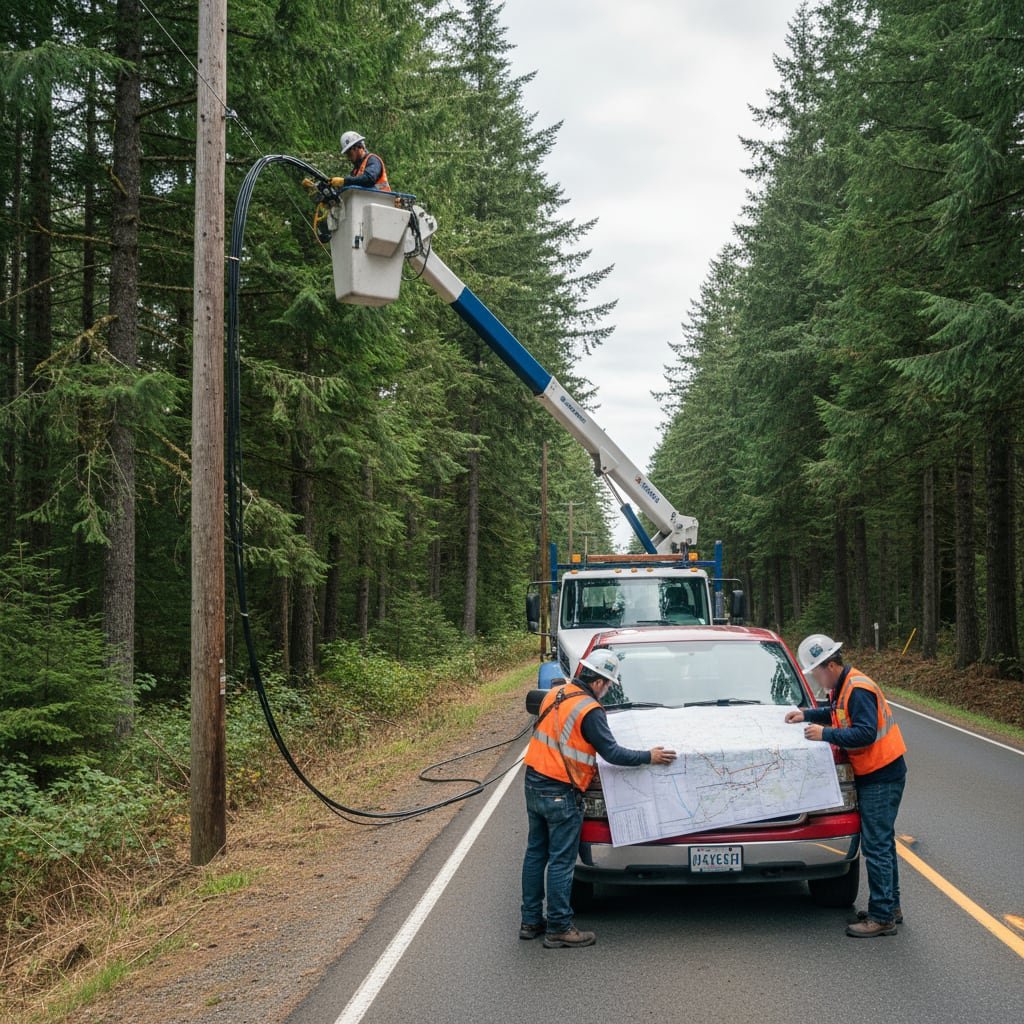
Permitting doesn't kill projects at the end. It kills them in the middle, when a crew is mobilized, equipment is rented, and a federal land-use approval hasn't moved in six weeks. The NTIA ran a webinar this week pulling together federal permitting officials and a broadband provider who built a large fiber project in Alaska. The central point: knowing what agencies require, before you break ground, decides whether a project lands on schedule or bleeds cash.
Why This Matters to Your Crew Calendar
If you're building under a BEAD subgrant (BEAD is the $42.45 billion federal broadband program run through state broadband offices), your GC or ISP prime is carrying the permit risk on paper. But your crew calendar is the one that goes sideways when approvals slip. A six-week federal delay doesn't hurt the prime's office. It idles your two aerial crews and burns your working capital while fixed costs keep running.
That's the exposure many telecom contractors don't price. They bid crew days. They don't price permit risk.
What the Federal Permitting Path Actually Looks Like
Federal land-use permits run through agencies like the Forest Service, Bureau of Land Management, and Army Corps of Engineers depending on the terrain. Each has its own application window, review period, and conditions of approval. The NTIA webinar brought permitting officials from these agencies together with a provider who ran this gauntlet on a real Alaska project.
The Alaska example matters because Alaska has some of the most complex federal land overlap in the country. If a provider could map a fiber route through that and finish, the lessons transfer to the lower 48 states where federal land crossings are smaller but still trip up projects in states like Montana, Colorado, New Mexico, and Oregon.
The road map the NTIA offered isn't a shortcut. It's a sequence. Start permit applications earlier than feels necessary. Identify which parcels cross federal land before the route is finalized. Get into pre-application meetings with agency staff, because agencies flag problems in those meetings that would otherwise surface as denial letters six months later.
The Question on Your Desk Before You Sign the Next Contract
Here's the call you have to make. When your ISP or GC hands you a project scope, are federal land crossings identified and is the permit timeline built into the schedule, or is the schedule built assuming permits clear in 30 days because that's what the project manager typed into a spreadsheet?
Those are two different projects. One has a realistic crew start date. The other has a crew start date that exists to make the project plan look clean.
Before you commit crews, ask for the permit status on every federal parcel in the route. If the prime can't answer that question, you're the one absorbing the delay when it lands.
What to Do With This Right Now
If you have a BEAD project in your pipeline, here are three things worth doing this week.
- Pull the route maps and flag any parcels that cross federal land. Forest Service and BLM boundaries are public on the agencies' own mapping tools.
- Ask your prime contact for the permit log. If there isn't one, that's your answer about how seriously the timeline has been thought through.
- Build a permit delay clause into your next contract. A 30-day federal delay without a mobilization fee is a loss that doesn't show on your AR aging report until it's already happened.
The NTIA putting this on the record is useful. It means the road map exists and the agencies are signaling they want providers and their contractors to use it. That's a window. Use it before your next project is already in motion.
Want the full breakdown of how to protect your crew schedule when federal permits slip? Subscribe to The Splice for weekly reads built for telecom contractors running real crews.
The permit timeline is part of the project. Price it that way or absorb the cost of pretending it isn't.
Get BEAD updates before the trade press writes them up.
The Splice decodes federal funding intel for crews and ops, not policy folks. Action items, not summaries. One five-minute read a week. Free.
Get this coverage first in Google