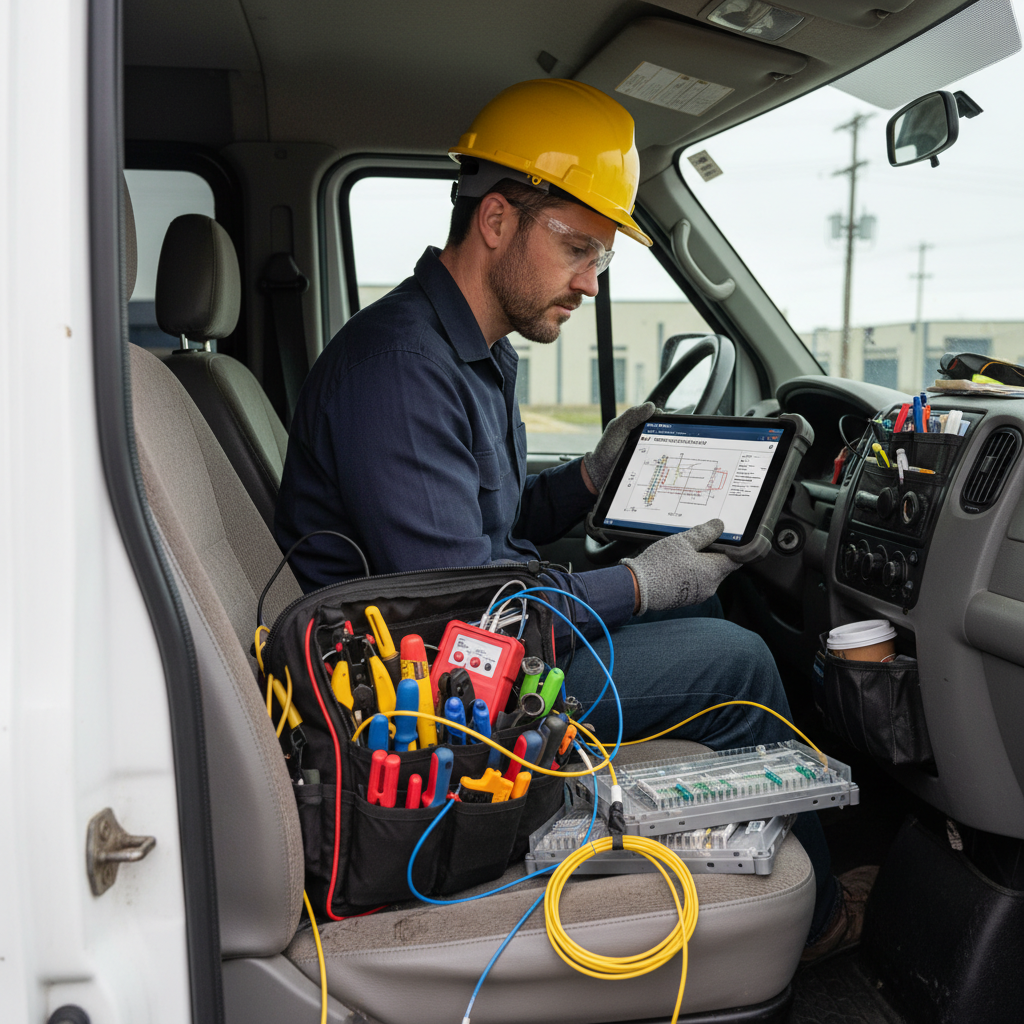
The Fiber Broadband Association launched FBA Academy in May 2026. If you are running 5 to 25 crews and wondering where your next wave of trained techs comes from, this is worth your attention.
What FBA Academy Actually Is
FBA Academy is an on-demand training platform built for fiber infrastructure deployment. The Fiber Broadband Association (FBA) runs it. The FBA is a trade group representing the fiber industry, from equipment makers to network operators to contractors.
On-demand means no fixed class schedule. A new hire can sit down with a module on a Tuesday and a foreman can review splice standards on a Thursday. The platform is built to scale, meaning it is designed to serve a lot of people at once without a classroom bottleneck.
Course names, pricing, certification detail, and enrollment terms change on a rolling basis. Check fiberbroadband.org directly before you commit a crew to a training calendar.
Why Your Crew Pipeline Is the Real Issue Here
BEAD funding is moving through states right now. Some states are issuing subgrantee awards. Others are still in final application review. Either way, the work is coming. The labor shortage is not going away on its own.
Here is the call you have to make: do you grow your crew count by hiring experienced techs and competing on wage, or do you build a training pipeline that lets you bring in less experienced workers and develop them?
Most telecom contractors I work with hit the same wall. They find a body, put them on a truck, hope the foreman has time to teach them, and lose them in 90 days because the training was inconsistent and the new hire never felt competent. That cycle is expensive. Every failed hire costs you real dollars in recruiting time, truck downtime, and rework.
A structured on-demand platform like FBA Academy does not fix that problem by itself. But it gives you a shelf to put new hires on with clear material to work through before they ever touch a splice tray.
How to Think About This for Your Back Office
If you are planning crew growth for 2027, the question is not whether to train. The question is whether you build your own training system or plug into one that already exists.
Building your own takes time and a subject matter expert on your payroll. Plugging into FBA Academy or a similar platform trades some control for speed. Neither is wrong. The choice depends on how fast you need to scale and how differentiated your work is.
A 12-crew underground contractor in the Midwest we work with built a simple 30-day onboarding binder tied to YouTube videos and a weekly foreman check-in. Low cost, high retention. FBA Academy is a more formal version of the same idea.
What matters is that you have something. New hires who know what they are learning and why they are learning it stay longer. Crew margin improves when you are not constantly backfilling the same position.
What to Do This Week
Pull up fiberbroadband.org and look at what FBA Academy covers. See if the course content maps to the work your crews actually do. If it does, get a cost per seat and run it against what one failed 90-day hire costs you in real dollars.
If it does not map to your work type, file it and revisit it when BEAD volume forces you to grow faster than your informal training can handle. That day is closer than most contractors think.
This newsletter covers the business decisions behind the broadband build-out every week. If someone forwarded this to you, you can subscribe at thesplice.net.
Your training system is your crew pipeline. Build it before you need it, not after.
Get BEAD updates before the trade press writes them up.
The Splice decodes federal funding intel for crews and ops, not policy folks. Action items, not summaries. One five-minute read a week. Free.
Get this coverage first in Google