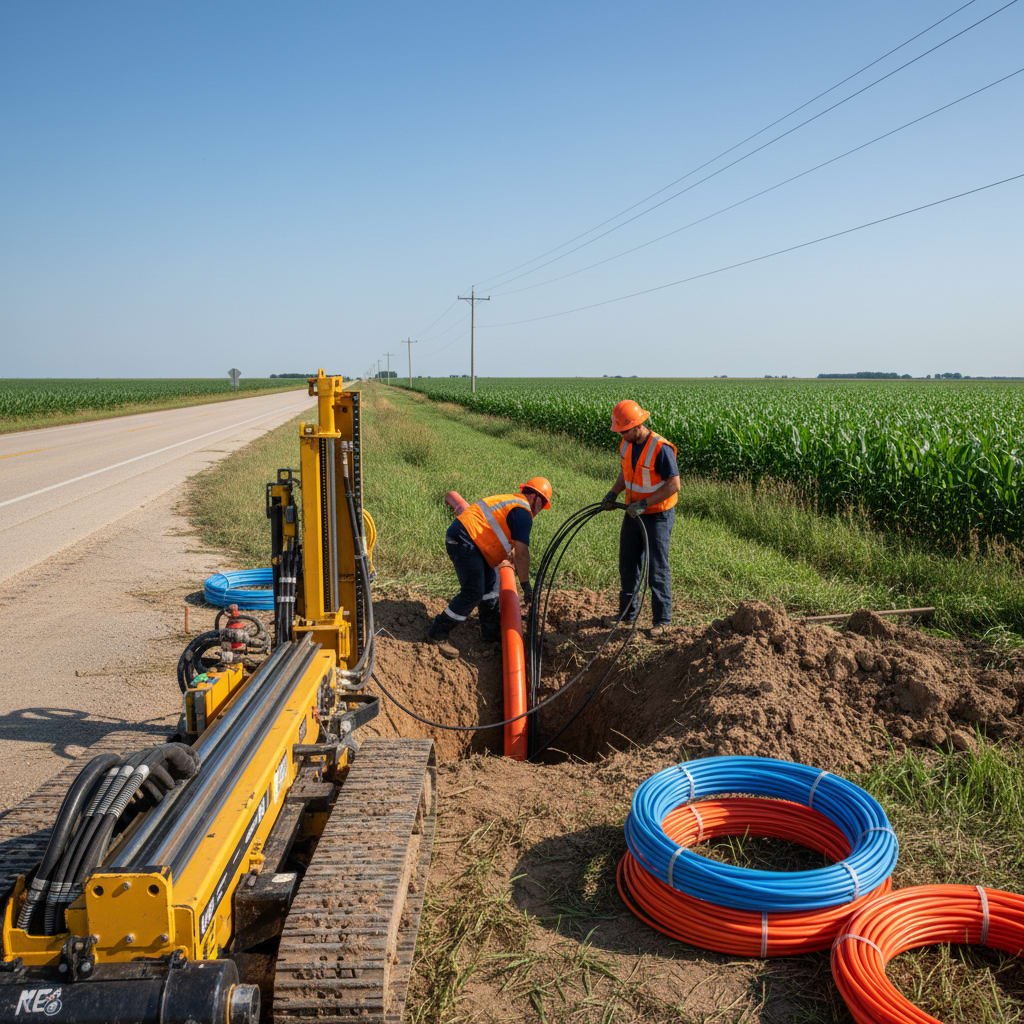
Illinois got its BEAD final proposal approved by the NTIA. That makes it official: every state and territory in the country now has a green light. The approvals are done. The waiting is over. What happens next is on the contractors who show up ready.
What 'All Approved' Actually Means for Your Pipeline
BEAD, the Broadband Equity, Access, and Deployment program, is a $42.5 billion federal broadband buildout funded through the NTIA (National Telecommunications and Information Administration). States had to submit final proposals outlining how they'd spend their allocations. NTIA had to approve each one before any money could flow to ISPs and, from there, to the contractors doing the work.
That approval step is now complete across all 56 states and territories. That's not a small thing. For the past two years, a lot of contractors have been watching this program from the sideline because the money wasn't real yet. It's real now.
States can begin moving funds to subgrantees, meaning the ISPs and local entities chosen to build out broadband in unserved and underserved areas. Those ISPs will need crews. That's your opening.
The Gap Between Approval and Your First Work Order
Here's what you need to know: approval doesn't mean checks are being written this week. There's still a gap between NTIA signing off and a work order landing in your inbox. States have to run procurement, ISPs have to finalize contractor relationships, and some states are further along than others.
But this milestone collapses the uncertainty. Before approval, ISPs couldn't commit. They didn't know the rules were final. Now they do. Expect conversations to move faster.
If you run aerial or underground crews, you may have been getting questions from ISP contacts for months. Those conversations stalled because the ISPs themselves were waiting on state approvals. That stall is gone.
The Call You Have to Make Right Now
If you've been waiting to have the BEAD conversation with your ISP contacts, stop waiting. Call them this week. Ask where they are in their procurement timeline. Ask what crew capacity they're planning around. Ask if they've selected a contractor or if that's still open.
You're not chasing. You're helping them plan. That's a different posture and it gets a different response.
On the back office side, BEAD work carries documentation requirements that standard ISP work doesn't always have. Certified payroll, Buy America compliance, prevailing wage in some states. If your back office isn't set up for that, now is the time to get it sorted before the work order arrives. Picture a contractor who lands a BEAD-adjacent contract and then spends weeks scrambling to get certified payroll software running. Don't be that contractor.
Which States Are Actually Moving
Some states have been ready to execute since early 2026. Others, including Illinois, were still working through the final approval process into late August. Now that the last approvals are in, the slower states can accelerate. Watch for procurement announcements from state broadband offices in Q4 2026 and into 2027.
Your state broadband office website is the place to track this. Many post ISP award lists and procurement timelines publicly. If you don't have that page bookmarked, bookmark it today.
Your Crew Margin Depends on Getting In Early
BEAD contracts that go to ISPs who already have contractor relationships locked in will not be rebid for you later. The ISPs who know your crew, your quality, and your capacity are the ones you want to be talking to before their procurement closes. After it closes, you're competing on price with whoever showed up.
Early positioning protects your crew margin. Late positioning turns you into a commodity.
For the full breakdown on how to position your business for BEAD work before your ISP contacts finalize their contractor lists, subscribe to The Splice below.
The contractors who get BEAD work aren't the ones who waited for the RFP. They're the ones already in the room when the ISP wrote it.
Get BEAD updates before the trade press writes them up.
The Splice decodes federal funding intel for crews and ops, not policy folks. Action items, not summaries. One five-minute read a week. Free.
Get this coverage first in Google