Every state and territory BEAD plan is now approved. That's the gate cleared. The $18.2 billion heading toward broadband deployment is no longer a promise on paper. It's moving toward contracts, and telecom contractors who aren't already talking to subgrantees are late.
What the Numbers Actually Tell You
NTIA-approved plans call for 3.79 million locations to get funded connections. Of those, 63 percent go fiber. Another 22 percent go satellite. The rest falls to other fixed wireless or blended solutions.
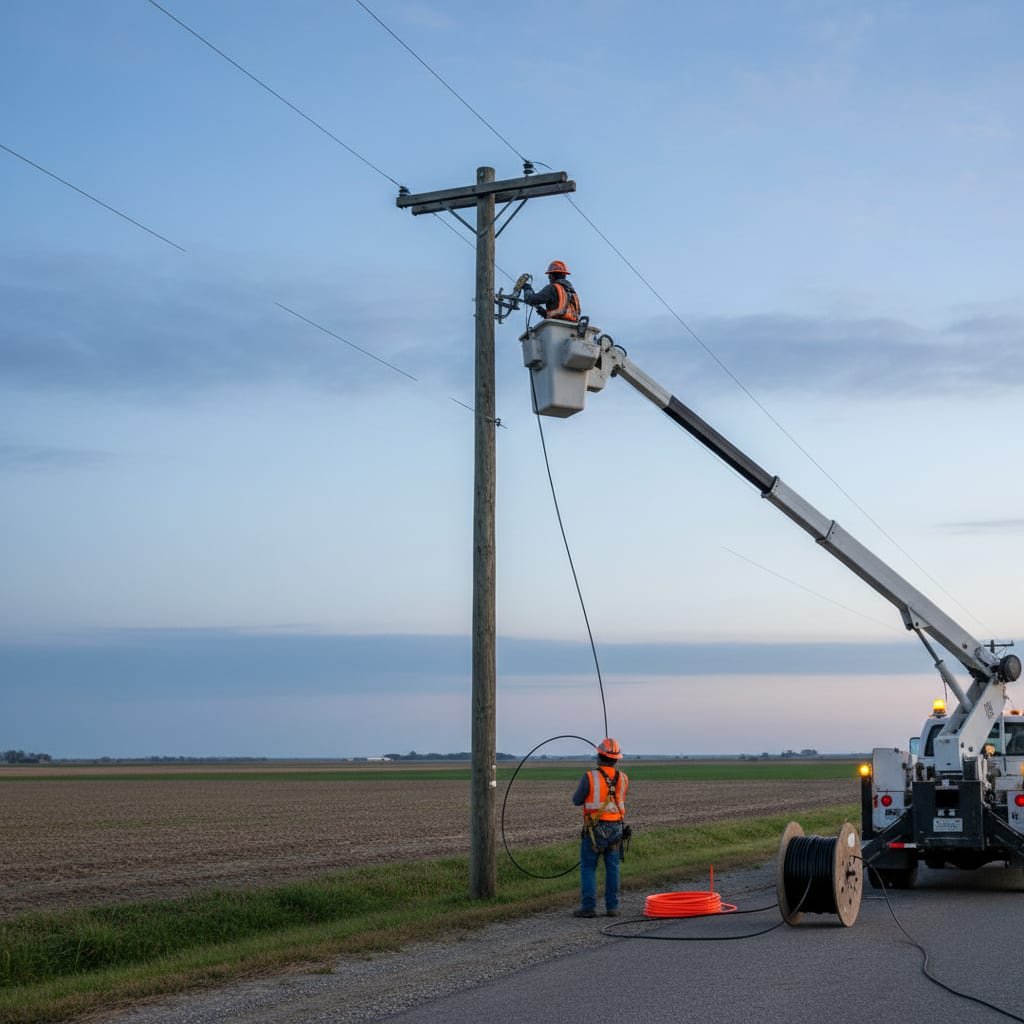
That fiber share matters to your crews. Aerial lashing, underground boring, drop installs, splicing. That's where the hours live. A 63 percent fiber split across 3.79 million locations is a serious volume of physical work that has to be done by someone with a bucket truck and a splicer.
Satellite installs are real work too, but the labor profile is different. Shorter installs, lighter equipment, thinner margins per location. If your crews run fiber, the 63 percent number is where to focus your positioning.
The Gap Between Approved and Under Contract
Plan approval is not the same as a contract in your truck binder. States still have to run their subgrantee selection processes. Subgrantees, the ISPs and utilities that receive BEAD funds directly from each state, then hire telecom contractors to do the field work.
That chain takes time. Some states are ahead. Some are still working through procurement. August 2026 means you're in a window where subgrantee awards are either already out or coming fast. The contractors who built relationships six months ago are fielding calls right now. The ones waiting for RFPs to drop cold are a step behind.
Here's the call you have to make this week: do you know which subgrantees in your region received BEAD awards, and have you talked to their ops or construction leads directly? If you can't answer yes to both, that's the gap to close before September.
Where to Look by Work Type
If you run aerial crews, the rural fiber routes are your target. BEAD pays to connect locations that lack reliable high-speed service today, including county roads and farm-to-market routes that have never had fiber.
If you run underground bore or directional drill crews, look at municipalities and denser rural communities where buried builds are the preference. State plans vary on make-ready requirements, so check your state's approved plan for conduit and trench specifications before you quote anything.
If you run a mixed shop, this is a good moment to look at your crew capacity honestly. BEAD builds tend to run long timelines with high location counts. Staffing to a 12-month burn rate on a BEAD contract is different from a quick drop blitz for a regional ISP. Plan your working capital accordingly, because AR on government-adjacent work can run 60 to 90 days.
What You Should Do Before October
Get your COI and bonding limits current. Subgrantees receiving federal funds will ask for higher limits than a typical ISP sub agreement. Find out which carriers and ISPs in your region received provisional or final BEAD subgrantee awards. Your state broadband office's website is the right place to look, and many have published that list by now.
Then call. Not email. Call their construction or vendor relations contact and introduce your shop. Crew count, work type, region covered, certifications. Short and factual.
The money is approved. The locations are mapped. The ISPs have their awards. The only question left is which contractors show up ready.
Approved plans don't build fiber. Crews do. Be the contractor already in the room when the work order gets written.
This issue of The Splice covers BEAD positioning every week through deployment. If you're not subscribed, you're working with a shorter view than your competitors.
Get BEAD updates before the trade press writes them up.
The Splice decodes federal funding intel for crews and ops, not policy folks. Action items, not summaries. One five-minute read a week. Free.
Get this coverage first in Google