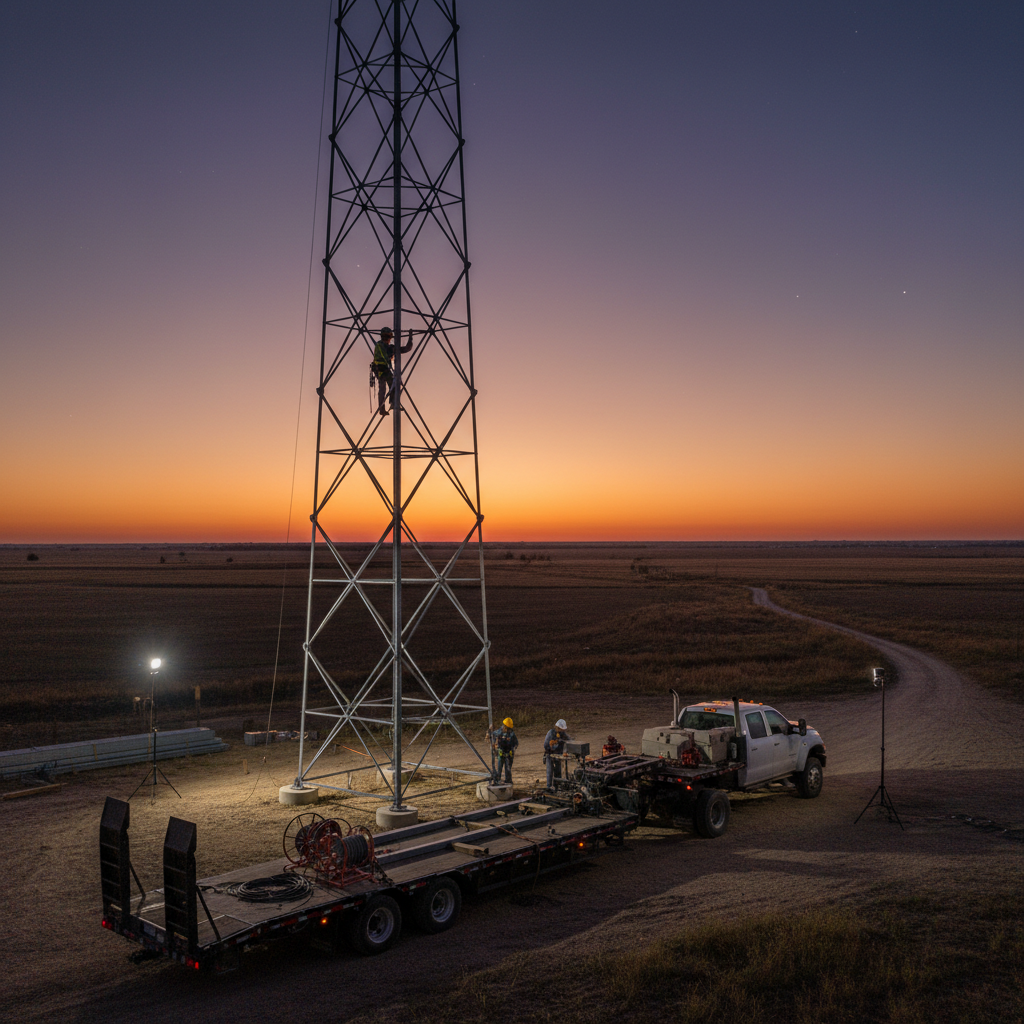
The first BEAD-funded internet connections are live. Louisiana and Nebraska both activated fixed wireless towers in what the program's administrators are calling the move from planning to deployment. If you have been waiting to see whether BEAD would actually produce work, this is your answer.
What Just Happened and Why It Matters to Your Crew Schedule
BEAD, the Broadband Equity, Access, and Deployment program, is a $42.5 billion federal program administered by the NTIA (National Telecommunications and Information Administration). It funds broadband buildout in unserved and underserved areas. For two years, most of the money sat in planning documents and state offices. That changed this month.
Louisiana and Nebraska are the first two states to move BEAD dollars from paper to poles. Both connections use fixed wireless towers. The ISPs and telecom contractors on those first connections have not been named publicly. What the record does show is that deployment has started.
For telecom contractors, that sentence is the whole ballgame. Planning phases do not pay crews. Deployment does.
Fixed Wireless First Means Tower Work Before Fiber Work
The first connections are fixed wireless, not fiber. That is worth paying attention to if you are positioning for BEAD subcontracts.
Fixed wireless deployments need tower crews, equipment riggers, and ground-based install teams. If your crews run fiber, your window is still coming. The contractors getting first calls right now are the ones already in conversations with ISPs building wireless infrastructure.
Here is the call you have to make: Do you have relationships with the ISPs and prime contractors in your state who are positioning for fixed wireless work? If not, that is the gap to close this month, not next quarter.
Two States Live Means Others Are Watching the Clock
Louisiana and Nebraska moving first creates pressure on state broadband offices everywhere else. Every state broadband director who has not yet activated deployment is now looking at two peers who did. That kind of peer pressure moves bureaucracies faster than policy memos.
This is not guaranteed to unlock work in your state by September. BEAD timelines vary by state, and the source does not specify when other states will follow. What it does tell you is that the program is no longer theoretical. Deployment is the current phase.
If your state has issued a BEAD subgrantee list, meaning the ISPs awarded funds, those are the companies to call. Not to pitch. To ask one question: when does ground break, and who is doing the work?
What Your Back Office Needs to Be Ready
BEAD work comes with federal compliance strings. Prevailing wage rules, Buy America requirements for materials, and reporting obligations all run through the prime contractor to you. I have seen telecom contractors win the work and then lose margin because the back office was not ready for the paperwork load.
Before you crew up for BEAD work, make sure three things are in place. First, your certified payroll process is running. Davis-Bacon compliance is not optional on federally funded broadband. Second, your COI (certificate of insurance) and bonding are current and sized for the contract value you are pursuing. Third, your AR process can handle payment terms that often run 45 to 60 days on government-adjacent work. DSO on BEAD jobs will test your working capital. Know your number before you sign.
The Program Is Moving. The Question Is Whether You Are Positioned.
BEAD activation in two states is early. It is also real. The contractors who get called first are the ones already in the room. That means they have registered with state broadband offices, introduced themselves to the ISPs holding subgrantee awards, and have their compliance docs ready to share.
This week's issue of The Splice breaks down the compliance checklist and the ISP outreach framework in more detail. Subscribe if you are not already in.
Deployment money only flows to contractors who are already known before the contracts get written.
Get BEAD updates before the trade press writes them up.
The Splice decodes federal funding intel for crews and ops, not policy folks. Action items, not summaries. One five-minute read a week. Free.
Get this coverage first in Google