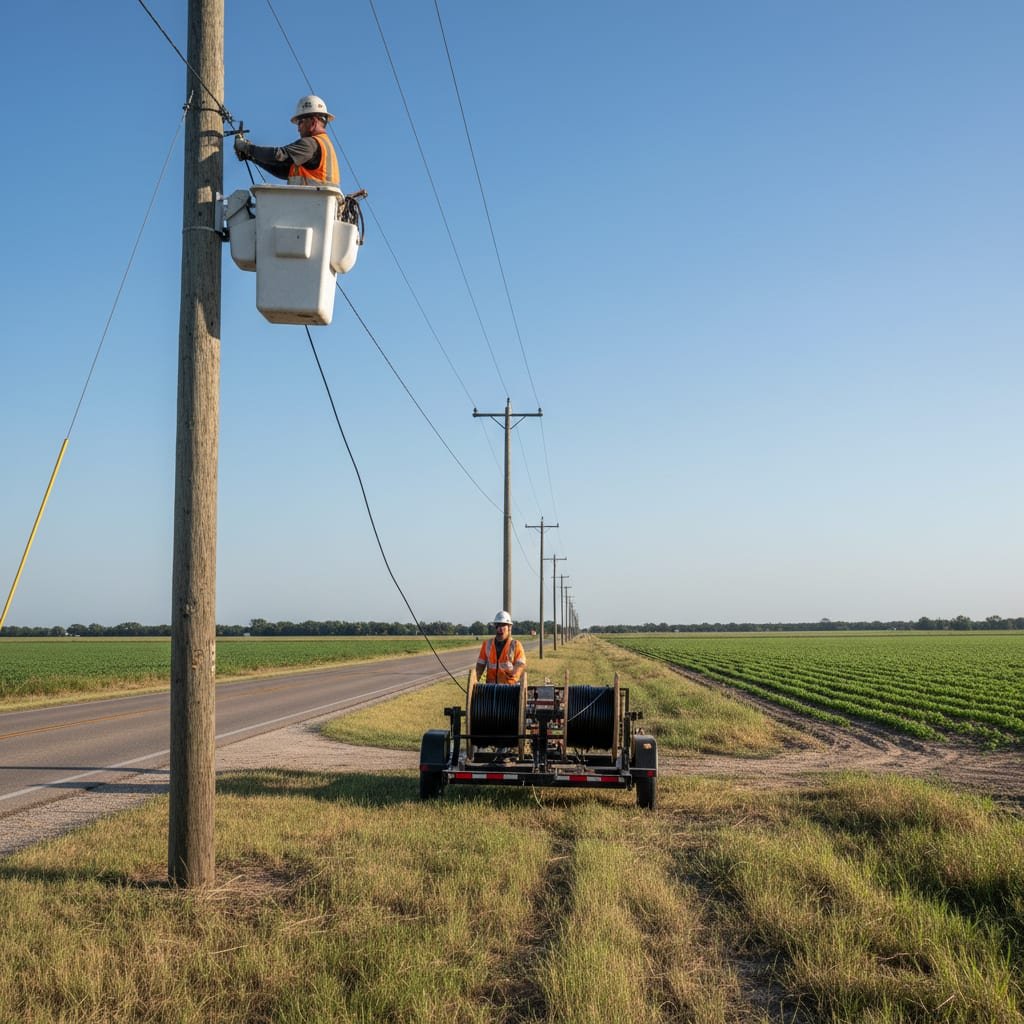
All 56 BEAD plans are approved. That's every state, five territories, and Washington, D.C. The Trump administration signed off, NTIA's Brandon Roth called it a major policy victory, and now the clock is running. The question on your desk this week: is your business positioned to work when your state starts signing contracts with ISPs?
What Just Happened and Why It Changes Your Pipeline
BEAD stands for Broadband Equity, Access, and Deployment. It's a $42.45 billion federal broadband program administered by NTIA, the National Telecommunications and Information Administration. Each state had to submit an Initial Proposal Volume 2 before any construction money could move. As of late August 2026, every single one of those plans has cleared federal review.
That's the gate that just opened.
States can now move to the contract phase. In BEAD terms, the ISPs that won provisional awards are called subgrantees. A subgrantee is an ISP that got a state broadband office to pick them for a coverage area. Those ISPs now need boots on the ground. That's you.
The Gap Between Approval and a Signed Work Order Is Real
Don't mistake federal approval for a shovel in the dirt. States still have to finalize contracts with each subgrantee ISP. That process moves at different speeds in different states. Some broadband offices are staffed and ready. Others are running lean and will take months to execute agreements.
Other federal broadband rounds have followed the same pattern. The approval milestone gets celebrated. Then contractors can wait months before a real work order lands. Plan for that gap in your WIP, your working capital draw, and your line of credit.
Here is the call you have to make: do you wait for a work order to show up, or do you get in front of the ISPs in your state right now, before they've picked their build crews?
How to Find the Subgrantees in Your State Before They Find Someone Else
Your state broadband office has published, or is about to publish, the list of ISPs that received provisional awards in your territory. Those are public records. Pull the list. Map which ISPs are building in your existing service areas. Call the construction or operations leads at those companies directly.
Ask them two things. First, have they selected a build partner for their BEAD footprint? Second, are they open to a 30-minute conversation about how you've built in that terrain before?
That conversation is not a sales pitch. It's a qualification call. ISPs want to know you can meet BEAD build standards, handle prevailing wage documentation if required, and carry the insurance their state contract demands. Walk in ready to show all three.
Your Back Office Needs to Be BEAD-Ready Before the Work Starts
BEAD contracts can carry documentation requirements heavier than a standard commercial build: certified payroll where state law or the ISP's contract requires it, progress reporting tied to state milestone schedules, and lien waiver chains tied to public funding rules. If your back office is running on spreadsheets and a shared Google Drive, that will break under BEAD volume.
Start cleaning up your AR aging and job costing well before your first BEAD subgrantee conversation. When an ISP asks to see your financial operations, you want answers ready. Contractors who wait until the work order arrives will be sorting paper while a competitor is pulling wire.
The Opportunity Is Real. So Is the Window.
Every state plan approved means every state can now move. Some will move fast. If you're in a state with a well-staffed broadband office, contracts could execute in the next 90 days. Watch your state broadband office website. Set a Google Alert for your state plus "BEAD subgrantee contract."
The contractors who win early BEAD work won't necessarily be the biggest. They'll be the ones who showed up to the ISP conversation before the work order existed.
This article ran in The Splice, a weekly read for telecom contractor owner-operators. Subscribe to get the breakdown every week before your competitors do.
The contractors who win BEAD work aren't the biggest. They're the ones who showed up before the work order existed.
Get BEAD updates before the trade press writes them up.
The Splice decodes federal funding intel for crews and ops, not policy folks. Action items, not summaries. One five-minute read a week. Free.
Get this coverage first in Google