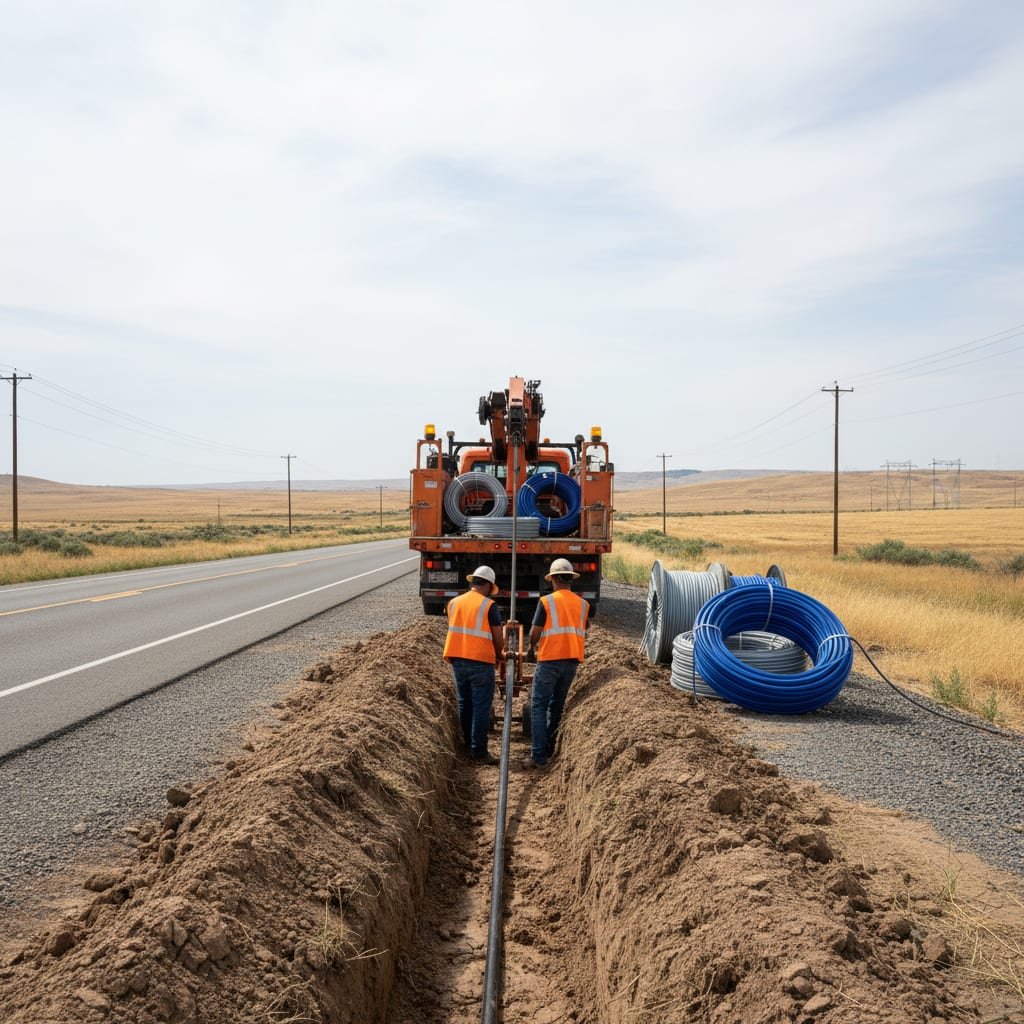
Hyperscalers are pulling fiber faster than mills can make it. ISPs are saying it out loud now: the AI data center buildout is making their supply problems worse. If you're scheduling installs four to eight weeks out, you're already feeling this.
What ISPs Are Actually Reporting
Lumen said it's laying middle mile fiber alongside strands reserved by hyperscalers like Microsoft, Google, and Amazon. That's not a capacity story. That's a materials and permitting story. When the biggest buyers on the planet are locking up conduit, cable, and right-of-way at the same time broadband deployment is accelerating under BEAD, the supply chain doesn't stretch. It snaps.
ISPs are flagging two problems. First, material costs are climbing. Fiber strand, innerduct, and splice enclosures are all getting pulled toward AI corridor projects that pay faster and order in bulk. Second, permit offices in counties that suddenly have three or four major infrastructure projects running at once are backed up. A permit that took six weeks last year is taking twelve now in some markets.
Why This Lands Hardest on Your Crew Margins
You're not buying at hyperscaler volume. You don't have a preferred vendor contract that locks pricing six months out. You're ordering when the ISP releases scope, and you're quoting based on what materials cost when you bid, not when you pull.
That gap is where crew margin goes. You win a job at $X per foot in March. By June, the conduit costs more. The permit took three extra weeks. Your crew sat. DSO stretched because the ISP's project timeline slipped and they're holding invoices to match their own billing cycle.
Here's the call you have to make: are your current contracts written with any material escalation protection? If not, you're absorbing cost increases that started in someone else's supply chain.
Permitting Bottlenecks Are Not Temporary
Don't wait for permit offices to catch up. In counties where AI corridor projects are active alongside BEAD-funded broadband work, the backlog is structural. Two infrastructure waves hitting the same municipal staff at the same time. That math doesn't resolve in a quarter.
The practical move is front-loading permit applications as early as your ISP will allow scope releases. Some telecom contractors are now requesting preliminary design packets before full project launch, just to get in the queue. It costs a few extra hours of estimating time. It saves three weeks of crew idle time on the back end.
What You Can Do This Week
- Pull your last three bids and check material pricing against current quotes. If the spread is more than 8%, you have a conversation to have with your ISP contact.
- Ask your material supplier what their lead times look like for Q4. Get it in writing if you can.
- Check which counties on your current pipeline have active AI corridor or data center projects. Those are your high-risk permit jurisdictions.
- Review your contract language on material escalation. If there's no clause, flag it before your next bid goes out.
The Bigger Picture for Your Pipeline
BEAD money is still moving toward deployment. That work is coming. But it's hitting the same supply chain and the same permit offices as the largest private infrastructure buildout in a generation. You can't control the macro. You can control your bid assumptions, your contract terms, and how early you get in the permit queue.
The contractors who come out of this cycle in good shape won't be the ones who waited for conditions to improve. They'll be the ones who priced and contracted for the conditions that actually exist.
The Splice covers the funding, supply chain, and operational moves that matter for telecom contractors running $2M to $15M businesses. Subscribe to get it every week.
The contractors who survive supply shocks are the ones who stopped bidding yesterday's prices on tomorrow's projects.
Get BEAD updates before the trade press writes them up.
The Splice decodes federal funding intel for crews and ops, not policy folks. Action items, not summaries. One five-minute read a week. Free.
Get this coverage first in Google