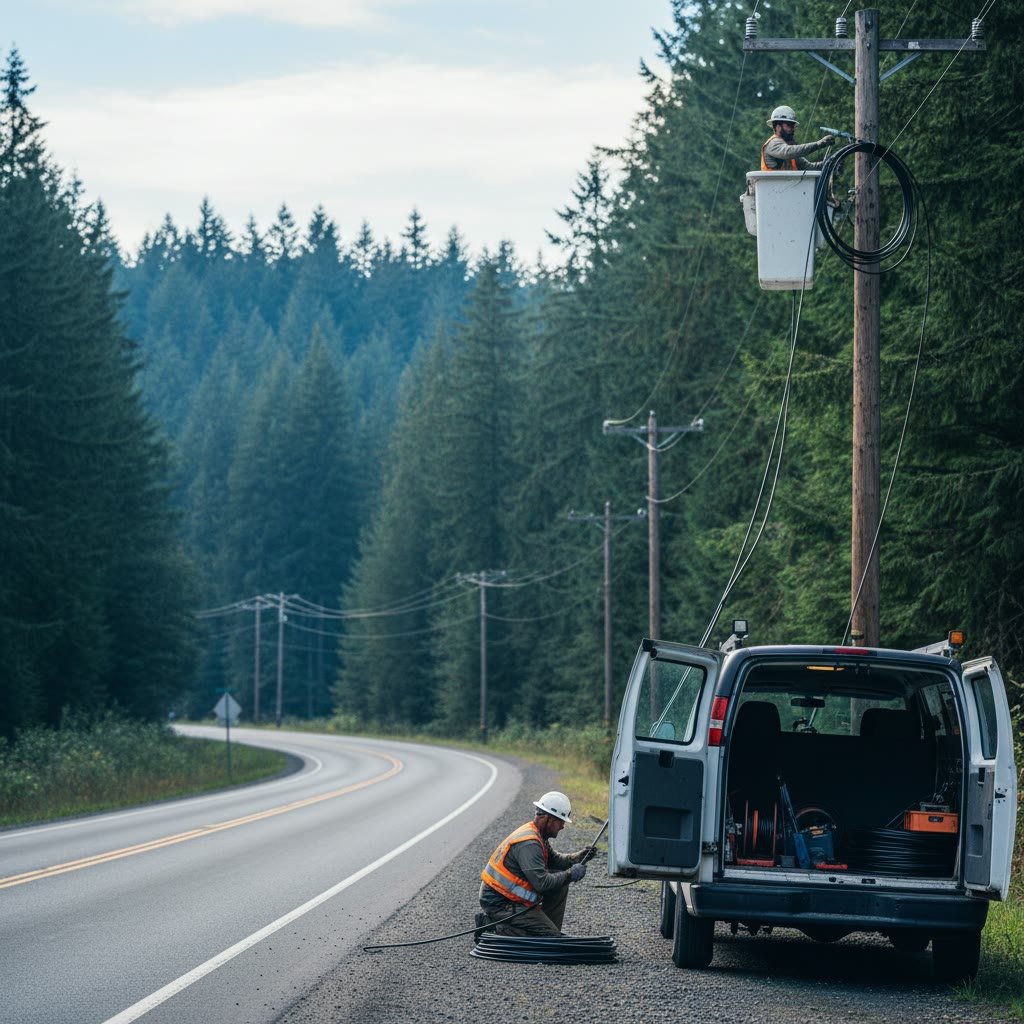
Washington state just signed seven BEAD grants. If you run crews in the Pacific Northwest, this is the moment you've been waiting on. If you don't, it's still worth reading because the pattern here repeats state by state.
Seven Awards Signed Means Work Is Coming Off the Shelf
BEAD stands for Broadband Equity, Access, and Deployment. It's the federal program sending roughly $42.5 billion to states to connect unserved and underserved locations. Washington got its BEAD allocation. It completed its planning. Now it's signing grants with ISPs.
Seven executed agreements means seven ISPs now have real money behind real projects. They're not planning anymore. They're under the gun to deploy.
That's your opening.
ISPs under a signed grant face build timelines, reporting requirements, and penalty clauses. They need crews fast. Not a conversation about crews. Actual crews with trucks, equipment, and supervisors who show up Monday morning.
What This Means for Your Pipeline Right Now
If you're not already in front of Washington ISPs, you're behind. Here's what to do this week.
- Pull the state's BEAD subgrantee list. Washington's Office of Broadband publishes award recipients. Find the seven names.
- Map their build territories against your crews' range. Which ones are building where you can actually work?
- Make direct contact at the operations level, not the procurement portal. A project manager or construction director, not a vendor application form.
- Come in with a specific offer: a two-crew aerial team available in X county starting Y date, or an underground bore crew that can run Z footage per day.
Vague outreach gets ignored. Specific capacity gets a call back.
The Working Capital Question You Can't Skip
Signed grants mean ISPs will start issuing purchase orders. But BEAD flows slow. States reimburse. ISPs pay after milestone approvals. That means you're funding the work before you see a dollar.
A two-crew aerial operation running 90 days on net-45 terms is carrying roughly $150,000 to $250,000 in unbilled or unpaid AR before the first check lands. If your line of credit can't cover that gap, you can't take the work, no matter how good the opportunity looks.
Check your AR aging report this week. Know your DSO. Know your available credit. If your working capital position can't support a 60-to-90 day cash gap, start that conversation with your bank now, before you win the contract.
The Colorado ISP Dispute Is a Warning
Buried in this story is a Colorado ISP that disputed its state's claim that it misused grant funds. That dispute is worth your attention even if you don't work in Colorado.
When ISPs fight with state broadband offices over fund misuse, builds stall. Crews get demobilized. Payments freeze. Telecom contractors working those projects are the ones holding the bag on unpaid invoices while lawyers sort it out.
Before you sign a work order with any BEAD subgrantee, ask directly: Is this project's state funding fully approved and disbursed to the ISP, or is it still pending reimbursement? One question. Thirty seconds. It tells you whether you're working on solid ground or building on a grant that's still under review.
Washington Is One of Several States Moving Now
As of September 2026, multiple states are in the grant execution phase. Washington is visible today. Others are signing quietly. The contractors who win work in the first wave aren't necessarily the biggest. They're the ones who stayed ready and moved fast when the paperwork cleared.
Your job this week: find the seven Washington subgrantees, match them to your geography, check your working capital, and make direct contact.
Want a breakdown of which states are executing BEAD grants right now and what questions to ask before you sign a work order? That's what The Splice covers every week. Subscribe below.
The contractors who win the first wave of BEAD work aren't the biggest. They're the ones who were ready when the paperwork cleared.
Get BEAD updates before the trade press writes them up.
The Splice decodes federal funding intel for crews and ops, not policy folks. Action items, not summaries. One five-minute read a week. Free.
Get this coverage first in Google