Every few months, someone publishes a piece claiming satellites will replace ground-based networks. That story sells. It also shapes how ISPs think about where to invest, and by extension, where your next work comes from. So when research firm Strand Consult released two reports this September questioning whether LEO satellites can actually replace mobile networks, telecom contractors need to read the implication, not the headline.
The Short Answer: Ground Networks Stay. Your Pipeline Doesn't Shrink from Above.
Strand Consult looked specifically at direct-to-device (D2D) service. That's when a standard phone connects straight to a satellite without a router or antenna box. SpaceX's Starlink leads this space, with more than 300 of its nearly 7,000 satellites capable of D2D. The firm's first report found real limits: capacity, spectrum, indoor signal loss, and uplink interference all constrain what satellites can do in practice.
Dense areas with high data traffic? Terrestrial networks handle that load better. The physics don't favor satellites in cities or suburbs. The second report ran a thought experiment: what if the last cell tower shut down in 2045 and satellites handled everything? The answer required simultaneous breakthroughs in uplink physics, satellite power, onboard computing, and spectrum policy across dozens of countries. That's not a roadmap. That's a wishlist.
Strand Consult's conclusion: satellites and ground networks run together in a hybrid future. Satellites extend coverage into remote areas. Ground infrastructure handles everywhere else.
What This Means for Your Backlog and Your Crews
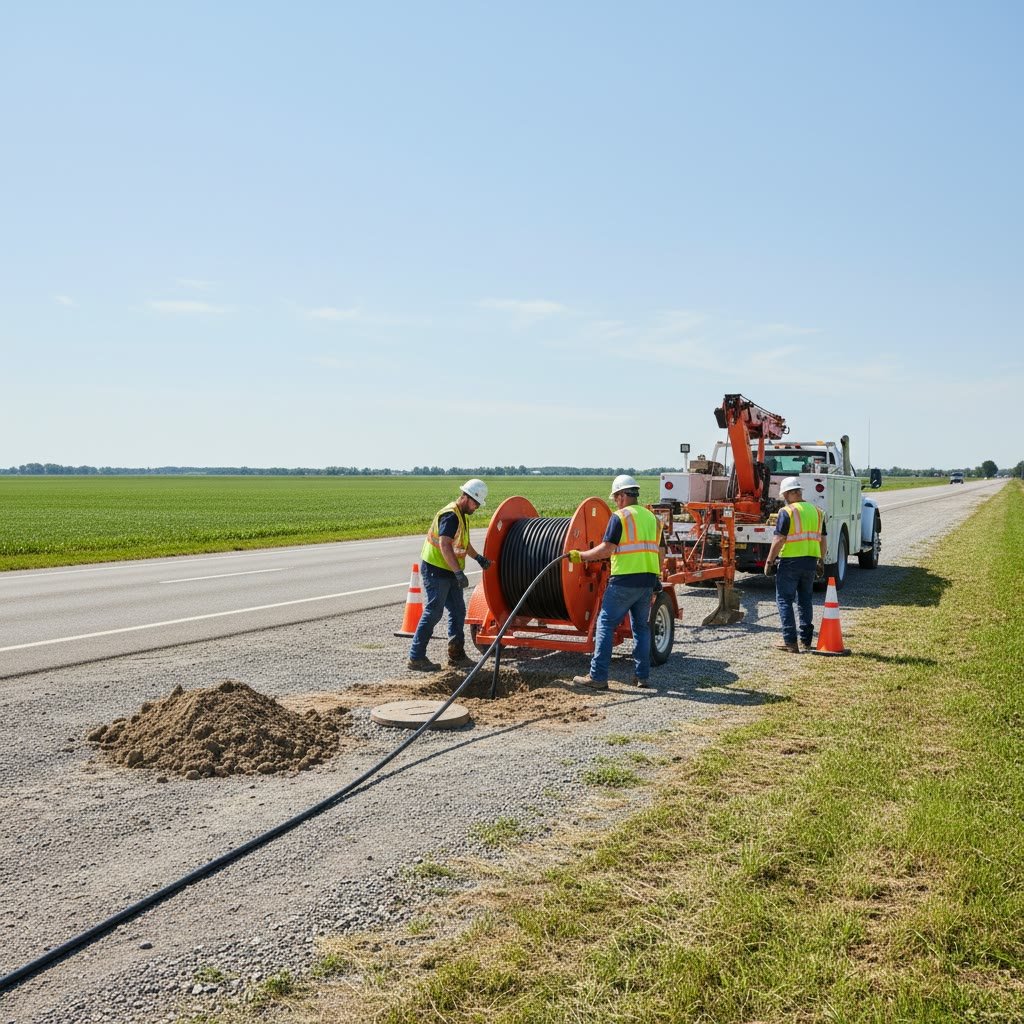
Here's the call you have to make. If your ISP customers are watching satellite news and quietly wondering whether fiber builds are worth funding, they're reading the wrong story. The Strand Consult findings reinforce what most regional ISPs already know in their gut: last-mile fiber and ground infrastructure stay relevant. The build-out timeline doesn't compress because Starlink launched more satellites.
I've seen this play out with contractors who work rural fixed wireless and fiber side by side. The operators who build ground infrastructure aren't losing ground to orbit. They're filling the coverage holes that satellites can't reach reliably indoors, in dense neighborhoods, or anywhere that requires consistent throughput for a household running four devices.
The BEAD program (Broadband Equity, Access, and Deployment, the $42.45 billion federal initiative to connect unserved and underserved locations) already accounts for this. States writing their BEAD implementation plans have been wrestling with whether to count satellite as a qualifying technology. Strand Consult's findings give state broadband offices more reason to hold the line on fiber-first requirements.
That matters directly to your pipeline. If your state keeps fiber as the preferred technology under BEAD, your backlog is more durable. If a state softens and lets satellite count for unserved locations, some of that work shifts away from ground crews.
The Spectrum Problem Isn't Going Away Soon
One detail in the reports that doesn't get enough attention: regulatory fragmentation. In Europe, satellite operators have to either share spectrum licensed to mobile carriers or secure dedicated satellite frequencies. The U.S. faces a version of the same fight. The FCC spectrum calendar for 2026 and 2027 is crowded, and satellite D2D operators need resolution on spectrum before they can scale.
That regulatory drag buys time. Time your customers need to finish BEAD buildouts. Time your crews need to stay productive on fiber and fixed wireless infrastructure that's already funded.
The hybrid future Strand Consult describes isn't a threat to telecom contractors. It's the operating environment you're already in. Satellites handle what ground networks can't reach. Ground networks handle everything worth building at scale.
Keep your crews focused on the work in front of them. The satellite story doesn't change your job this week.
If you found this useful, The Splice covers this stuff every week. Subscribe below and get it before your inbox fills with noise.
The network that's already in the ground is the one your customer can't replace with a firmware update.
Get BEAD updates before the trade press writes them up.
The Splice decodes federal funding intel for crews and ops, not policy folks. Action items, not summaries. One five-minute read a week. Free.
Get this coverage first in Google