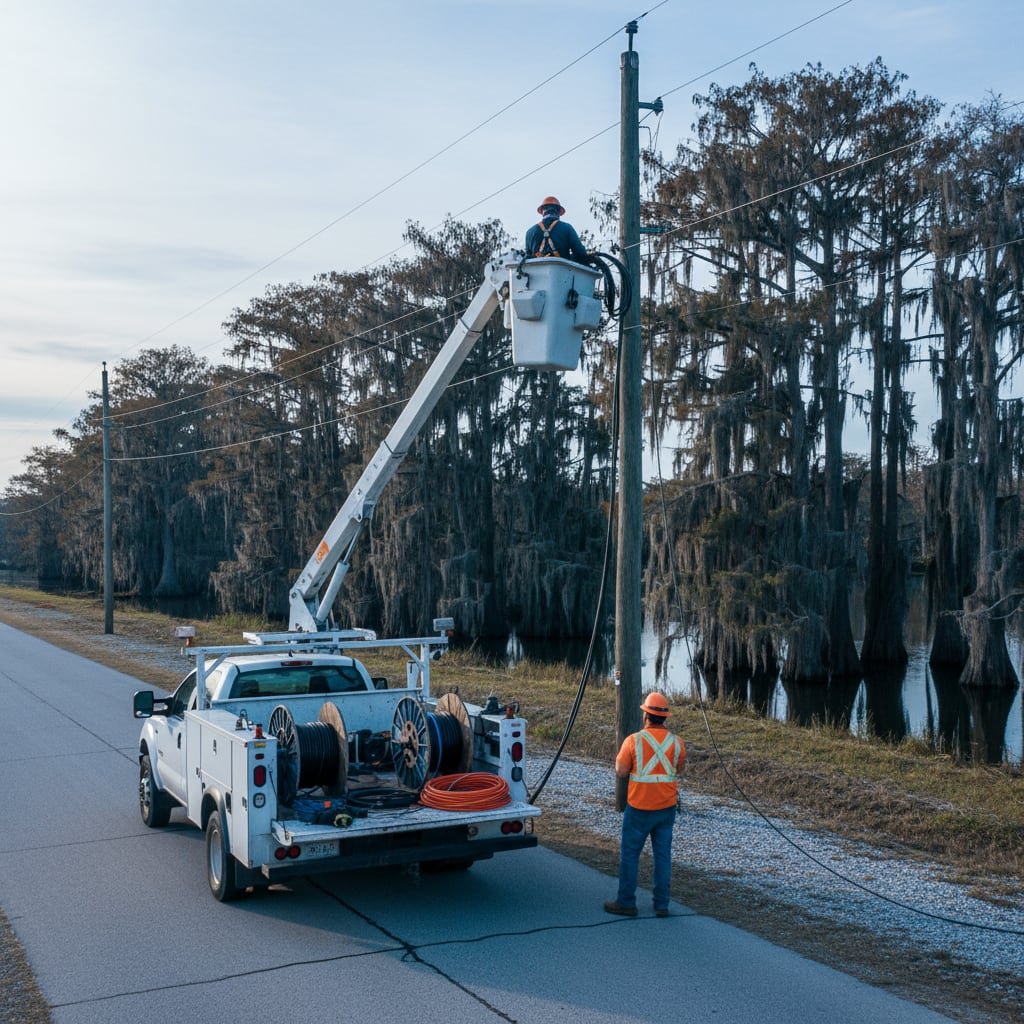
Louisiana is not waiting. ConnectLA, the state's Office of Broadband Development and Connectivity, says construction for nearly 15,000 broadband serviceable locations will wrap by the end of Q1 2027. That covers 23 parishes. If you run crews in the Gulf South and you're not already on those jobs, here's the question on your desk this week: who is, and how do you get in front of the next round?
What Louisiana Is Actually Doing
This is BEAD work. BEAD stands for Broadband Equity, Access, and Deployment. It's the federal program funneling $42.5 billion to states to wire up unserved and underserved locations. Louisiana has moved faster than most states to get shovels in the ground.
ConnectLA's announcement puts roughly 15,000 locations on a hard completion clock: Q1 2027. That's about 18 months from now. The work runs across 23 parishes, which means multiple ISP subgrantees (the companies that received BEAD funding from the state) are managing active build schedules simultaneously.
Where there are active builds, there are crew demands. ISPs don't self-perform most of this. They hire telecom contractors.
What This Timeline Means for Your Crew Calendar
A Q1 2027 completion target is not a soft goal. It's tied to grant milestones and state reporting. ISPs that miss it risk clawbacks or compliance trouble with the state. That pressure flows downstream to contractors.
Here's what that looks like in practice. ISPs running behind schedule get aggressive about locking in available crews. Telecom contractors who already have a track record in aerial and underground work in Louisiana are the first calls. If you don't have a relationship in place before the crunch, you're negotiating from a weak spot when the phone does ring.
The contractors who win Q4 2026 and Q1 2027 volume in Louisiana are likely making those calls right now, not in November.
23 Parishes Is Not One Market
Pay attention to the geography. Twenty-three parishes spread across Louisiana means this isn't one concentrated build. It's distributed work across different terrain, different ISPs, and different build specs. Some of it will be aerial. Some will be underground. Some parishes may sit in areas where you already have a yard or a crew base. Others may require you to mobilize.
Before you pursue any of it, know which parishes are active, which ISPs hold the subgrants in those areas, and what their construction timelines look like. ConnectLA is the state office managing oversight. Their public reporting is the fastest way to map which ISPs are under pressure in which areas.
The Back-Office Question You Can't Skip
A fast-moving state program like this creates a cash timing problem for telecom contractors who aren't prepared. BEAD-funded builds run on ISP billing cycles that don't always match your payroll week. If you're adding crews to chase this volume, you need to know your working capital position before you commit.
DSO (days sales outstanding, meaning how long it takes to collect after you invoice) on government-adjacent work often runs 45 to 60 days. Your crew cost hits week one. Your payment may not clear until week eight. A 15-crew aerial contractor in Texas I've seen work through a similar crunch had to tap a line of credit just to cover two payrolls on a state broadband job they ultimately got paid well on. The job was profitable. The timing nearly broke them.
Get your AR aging report current. Know your line of credit headroom. Then bid.
Louisiana Is Ahead. Other States Will Follow.
Louisiana's early movement is not an accident. ConnectLA has consistently been one of the more execution-focused state broadband offices. Their track record gives ISPs confidence to move fast, which means contractor demand in Louisiana is real and near-term.
Other states are still in the planning and approval stages. Louisiana is already a live market. If your crews are positioned in the Gulf South, this is the window.
Want breakdowns like this in your inbox every week? Subscribe to The Splice and stay ahead of where the work is moving.
The contractors who get the call are the ones who made the call first.
Get BEAD updates before the trade press writes them up.
The Splice decodes federal funding intel for crews and ops, not policy folks. Action items, not summaries. One five-minute read a week. Free.
Get this coverage first in Google