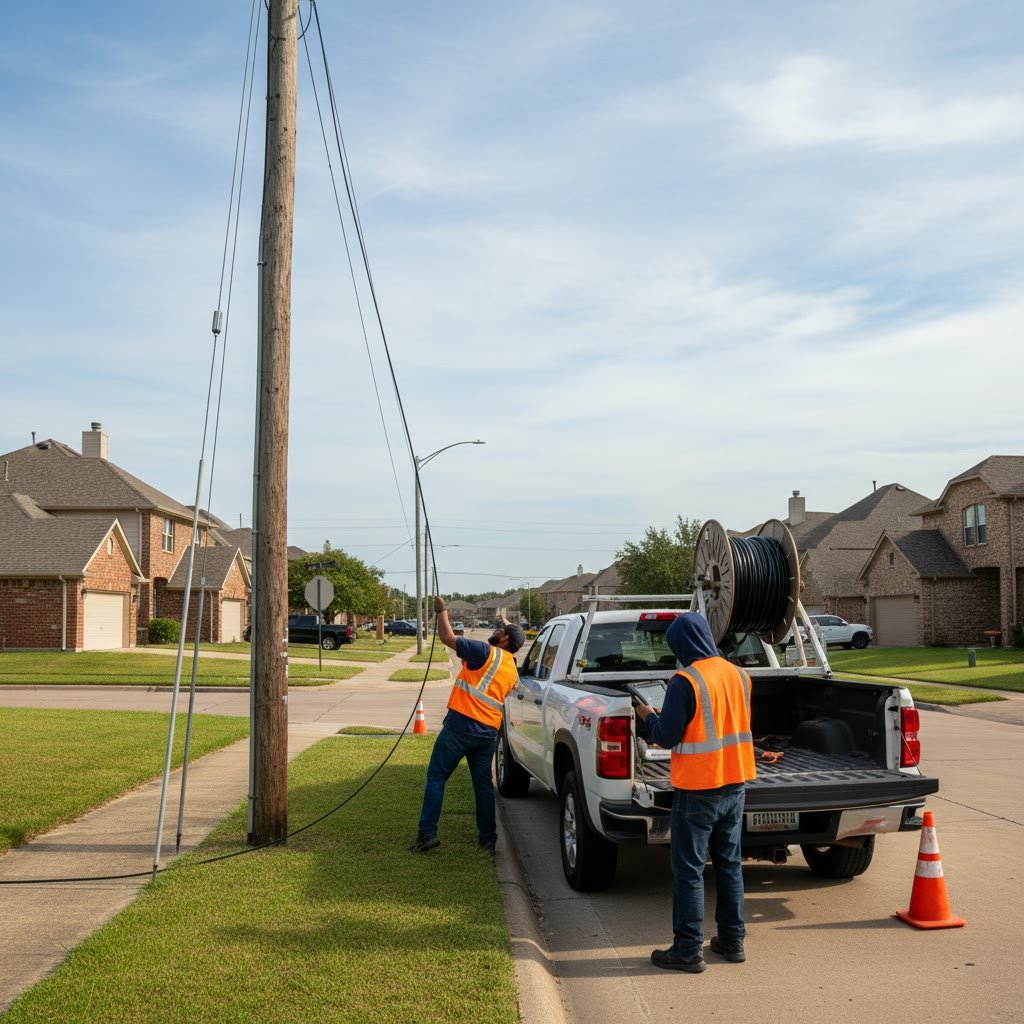
Kinetic passed 40,000 homes in Fort Bend County as of September 14, 2026. That's a county-level milestone that tells you something concrete about where the next phase of work is heading in the greater Houston market.
What 40,000 Passings Tells You About Pipeline
Fort Bend County sits southwest of Houston. It includes Sugar Land and a string of fast-growing suburbs. Kinetic, the fiber brand under Windstream, has been pushing fiber through that corridor. Forty thousand passings means the aerial and underground crews have already done heavy lifting. The drop-install wave follows. That's where telecom contractors with residential drop crews pick up work.
If you're running crews in the Houston metro and you're not already in conversations with Kinetic's construction management team, that's the call you need to make this week. Drop installs don't wait for contractors who show up late.
Fort Bend Build Pace Points to a Wider Texas Pattern
Kinetic isn't alone. LiveOak Fiber broke ground on a fiber network in South Carolina in September 2026. C Spire announced a high-capacity fiber route from Mississippi to Memphis. DFN won a $31.6 million Oregon BEAD contract for rural fiber. The regional build-out is moving in multiple directions at once.
Texas, though, is its own story. Fiber broadband added $1.6 billion to Houston-area home values since 2020, according to a September 2026 report. That number keeps ISP investment committees writing checks. Fort Bend is one data point in a much longer run of construction spending across the state.
The Question on Your Desk: Positioned or Chasing?
Here's what I've seen play out in markets like this. An ISP hits a milestone in one county, celebrates it publicly, then quietly kicks off the next zone's construction contracts within 60 to 90 days. The contractors who already have a relationship, a current COI on file, and a crew safety record in the system get the first calls. Everyone else chases the scraps at higher risk for lower margin.
You've got two moves right now.
- If you're in the Houston or Fort Bend market, confirm your contact at Kinetic's construction or outside plant team. Get your paperwork current. Ask specifically about drop install volume for Q4 2026 and Q1 2027.
- If you're not in Texas but you're watching similar ISP build announcements in your region, the same play applies. C Spire in Mississippi and Rightfiber, which secured a $1.6 billion credit line in September 2026, are both expanding fast. That credit line funds construction. Construction needs crews.
Don't Let AR Lag Kill a Good Run
One thing I watch closely when a contractor lands a new ISP account mid-build: DSO. Day sales outstanding, the average number of days between completing work and collecting payment. On a fast-moving residential build, invoices can stack up quickly. If your back office isn't billing weekly and following up on a tight cycle, you can finish a strong month and still be short on payroll.
A 12-crew drop-install contractor we work with in the Texas market cut DSO by 18 days after moving to weekly billing cycles and adding a Wednesday AR check-in. That change freed up enough working capital to take on a second ISP account without touching their line of credit.
The build is here. The question is whether your back office is set up to capture the margin it creates.
Want this kind of market read in your inbox every week? Subscribe to The Splice and stay ahead of where the work is moving.
The contractors who get called first aren't the ones who respond fastest. They're the ones who were already in the system before the milestone was announced.
Get BEAD updates before the trade press writes them up.
The Splice decodes federal funding intel for crews and ops, not policy folks. Action items, not summaries. One five-minute read a week. Free.
Get this coverage first in Google