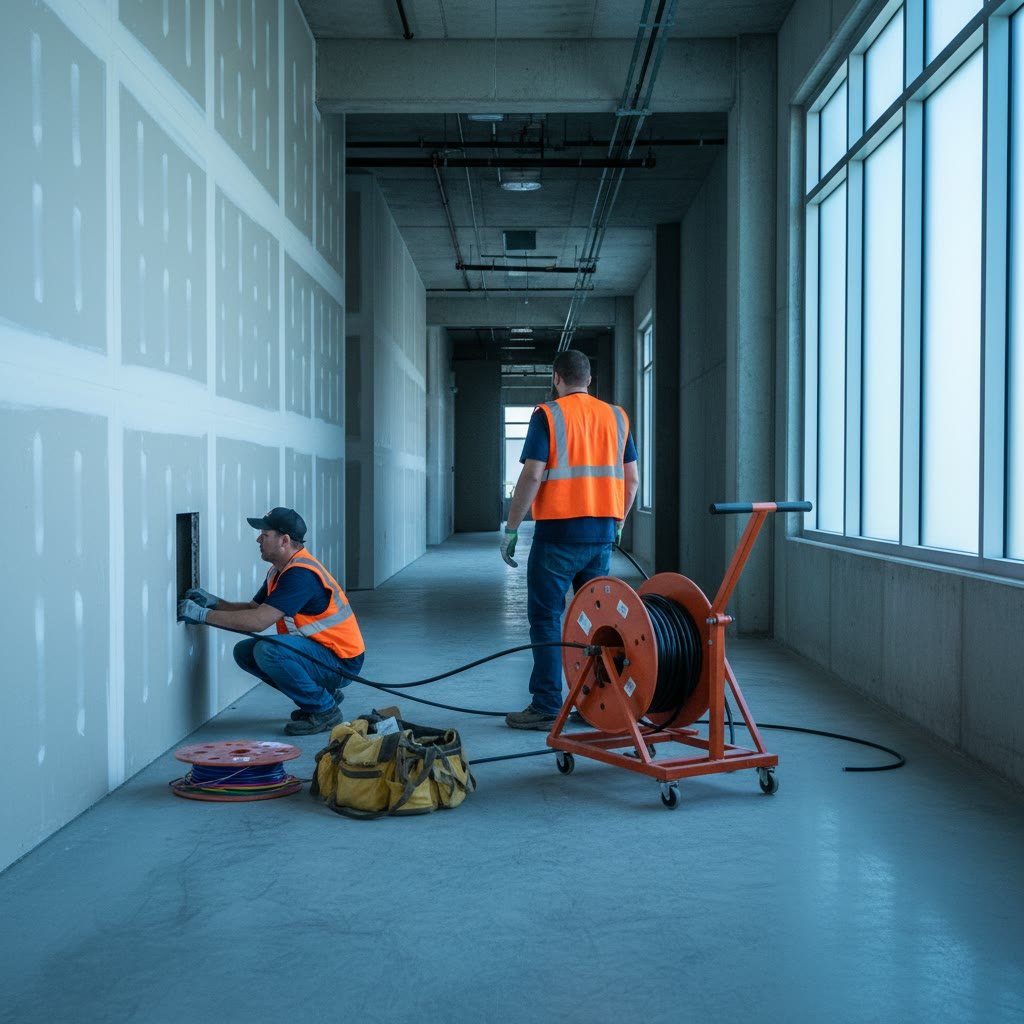
Ezee Fiber just pulled 8 Gbps into a Houston esports team house for Wildcard, an organization fielding 13 players and five coaches across three competitive rosters. That's a single-location install built around latency, packet loss, and uptime, not just raw speed. If you're not thinking about who's doing the physical fiber work behind deals like this, here's why you should be.
What This Deal Actually Tells You About Where Work Is Going
Esports venues aren't just gaming rooms. They're content production facilities with gaming stations, broadcast setups, lounge areas, and always-on connectivity demands. Wildcard's team house needs the same fiber density you'd route into a small data center or a multi-tenant commercial building.
Ezee Fiber isn't alone here. In December 2025, Brightspeed committed roughly $580,000 to esports and STEM programs across North Carolina. In October 2025, Kansas provider Twin Valley announced a community esports arena running dual 8 Gbps fiber links. The pattern is real: regional ISPs are using esports to showcase networks and reach younger subscribers. That means they need construction partners who can handle high-density commercial installs fast and clean.
Here's the call you have to make: are you positioned to work on those installs, or are you still waiting for the next residential drop order to hit your inbox?
Why High-Density Commercial Installs Pay Differently Than Residential Drops
A residential drop order pays you per unit. A commercial venue install pays you per scope. The scope on an esports facility includes conduit routing, cable management, patch panel termination, and sometimes structured cabling across multiple rooms. That's a different crew skill set and a different billing structure.
Crew margin on commercial work tends to run higher than residential volume work, especially when you're the contractor who knows how to stage a clean install in a live facility. The ISP doesn't want their showpiece venue looking like a rat's nest of cable on opening day.
One aerial and underground contractor we work with in the Texas Gulf Coast region started picking up commercial venue installs for a regional fiber ISP eighteen months ago. They dedicated two crews to it. Their DSO on that work runs shorter than on residential, because commercial project sponsors pay on milestone, not on unit count. That's a working capital difference that shows up on your AR aging report.
What to Do With This Information This Week
You don't need to pivot your whole business. You need to ask one question of every regional ISP you're already doing residential work for: are they chasing commercial venues, esports facilities, or community anchor institutions as part of their expansion strategy?
If the answer is yes, find out who manages those commercial projects. It may not be the same project manager handing you drop orders. Get in front of that person before another contractor does.
The regional ISPs doing deals like the Ezee Fiber and Wildcard partnership are the same providers who'll need construction crews when they land the next venue deal. They want contractors who've done this before. If you haven't, the first one you do is how you get on that list.
Also worth knowing: esports infrastructure is showing up in BEAD-adjacent community anchor institution buildouts in several states. BEAD (Broadband Equity, Access, and Deployment) is the $42.5 billion federal broadband program. Community anchor institutions like schools and community centers are eligible locations under some state plans. An esports-capable community center is still a community center. The fiber work looks the same.
If you're already talking to regional ISPs about their commercial pipeline, you're ahead. If you're not, this week is a good time to start that conversation.
The Splice covers the business of fiber construction for telecom contractors. If you're not subscribed, you're making decisions without the full picture.
The contractors who see venue installs coming before the RFP goes out are the ones who win the work.
Get BEAD updates before the trade press writes them up.
The Splice decodes federal funding intel for crews and ops, not policy folks. Action items, not summaries. One five-minute read a week. Free.
Get this coverage first in Google