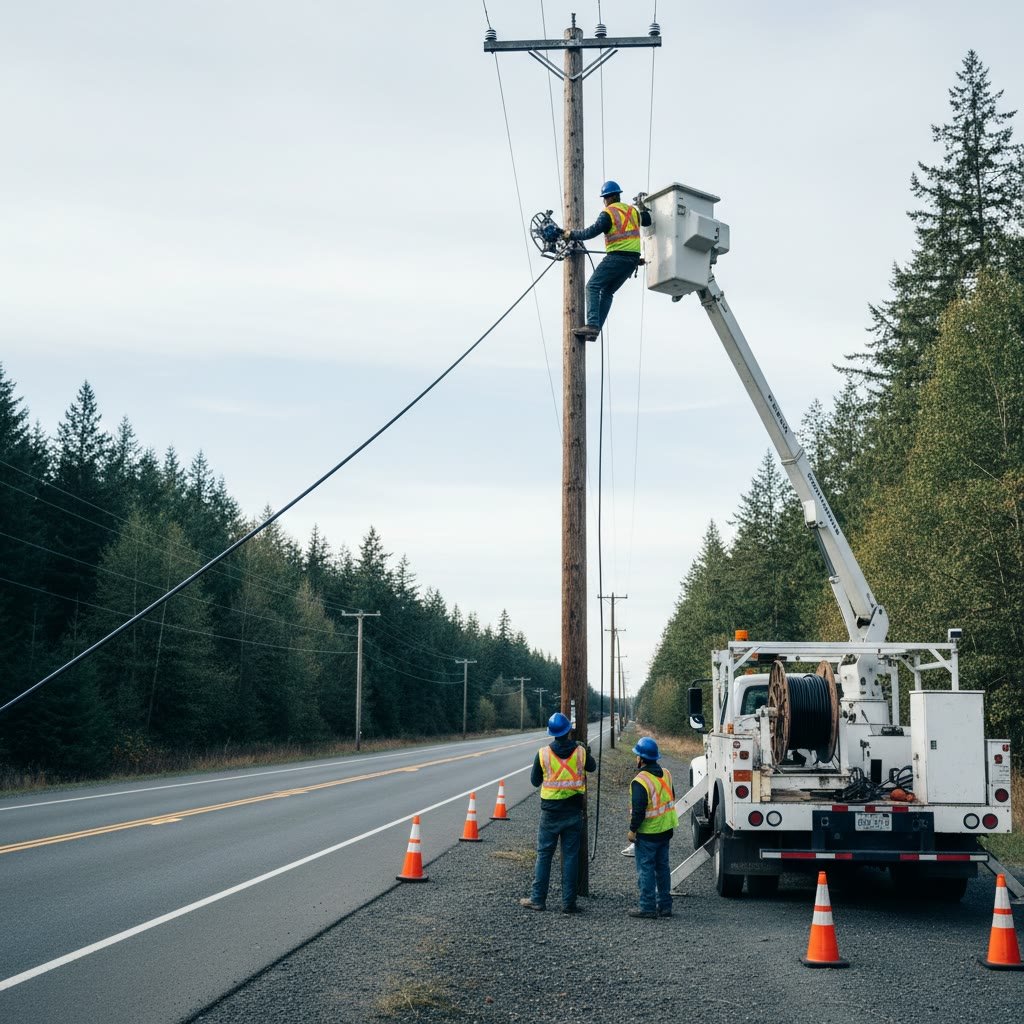
Washington state just signed its first seven BEAD contracts. That's $165.1 million moving from paper to permits, and construction is next. If you run crews in the Pacific Northwest, the question on your desk right now is whether you're in position to work this build or watching it from the sideline.
What Washington Just Locked In
The Washington State Broadband Office (WSBO) executed agreements with seven subgrantees under the BEAD program. BEAD, short for Broadband Equity, Access, and Deployment, is the federal broadband buildout program funded through the Infrastructure Investment and Jobs Act. Total contract value sits at $165.1 million. That breaks down to $123.9 million in federal BEAD dollars and $41.2 million in matching funds from state, private, and other sources.
These contracts don't start construction tomorrow. They clear the path for environmental reviews and permitting. That process takes months. But the clock is running, and the ISPs holding these contracts are already making crew decisions.
The Gap Between a Signed Contract and a Shovel in the Ground
Here's what most telecom contractors miss about BEAD timing. The ISP signs the subgrantee agreement. Then comes environmental review, permitting, and design finalization. That window, typically four to eight months, is exactly when your relationship with that ISP either gets built or doesn't.
If you're not already talking to these seven subgrantees, you're not too late. But you're close. Permitting clears, crews mobilize fast. ISPs in that sprint mode don't call contractors they've never met. They call the ones who showed up during the quiet phase.
What $165M in One State Tells You About the National Picture
Washington is one of the earlier states to reach signed subgrantee contracts. Most states are still in BEAD initial proposal review or volume two planning. That spread matters. It means the national BEAD build won't hit all at once. It rolls out state by state, which is actually good news for contractors running 10 to 25 crews. You can sequence your capacity across markets rather than scrambling to staff for one peak.
Watch Nevada, Idaho, and Oregon. Those states border Washington and are at different points in their BEAD timelines. A contractor building ISP relationships in Washington right now has a natural bridge into those adjacent pipelines.
The Back Office Question You Can't Ignore
One aerial contractor in the Midwest we work with nearly passed on a BEAD opportunity because their billing cycle was too slow. Their DSO sat at 62 days. The ISP needed a contractor who could float two months of labor and materials without straining their line of credit. They fixed the DSO problem first, then went after the contract. It took 90 days to clean up the AR aging. Start that work now, not after you win the bid.
BEAD contracts run through subgrantees who are themselves managing reimbursement cycles from state broadband offices. Payment terms can stretch. Contractors who can't carry receivables for 60 to 90 days get squeezed. Know your working capital position before you commit to a BEAD scope.
Your Move This Week
Pull the WSBO subgrantee list when it becomes public. Get the name of each ISP. Find the construction or operations lead, not the grants team. Send a one-paragraph note. Name your crew capacity, your fiber experience, and your Washington or Pacific Northwest footprint. That's the whole play.
If you want the full breakdown on qualifying your back office for BEAD work, the next issue of The Splice goes deeper on cash flow positioning for subgrantee contracts. Subscribe below.
The ISPs who get BEAD contracts don't wait to find crews. They already know who they're calling.
Get BEAD updates before the trade press writes them up.
The Splice decodes federal funding intel for crews and ops, not policy folks. Action items, not summaries. One five-minute read a week. Free.
Get this coverage first in Google