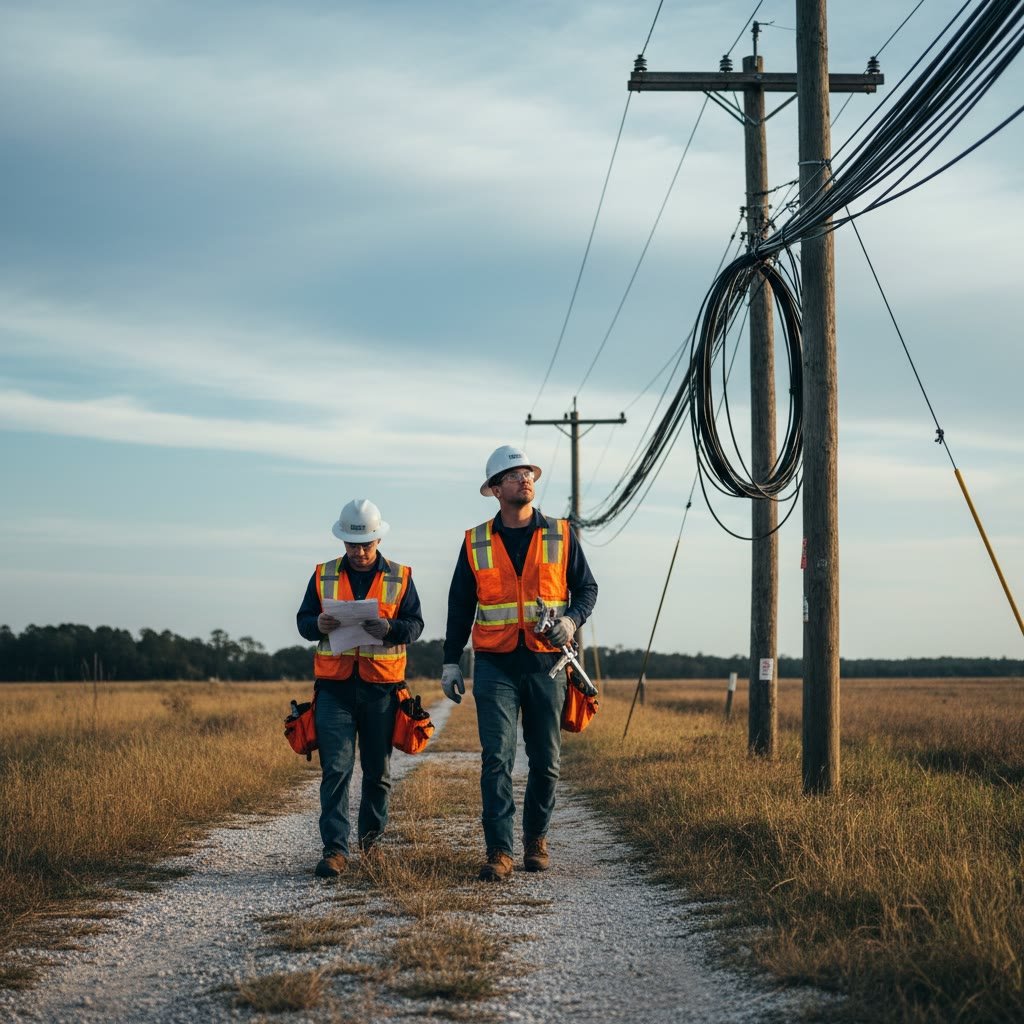
Electric cooperatives are walking away from BEAD money. Jim Matheson, CEO of NRECA, said it plainly: "The juice isn't worth the squeeze." Pole attachment disputes are eating co-ops alive, and some are cutting their losses before construction ever starts. That's your opening.
Why Co-ops Are Dropping Out (and What It Costs the Program)
BEAD, the Broadband Equity, Access, and Deployment program, is a $42.5 billion federal broadband buildout funded through the NTIA. States award grants to subgrantees, which are the ISPs, co-ops, and municipalities doing the actual buildout. Telecom contractors work for those subgrantees on the construction side.
Pole attachments are the sticking point. When a co-op wants to run fiber on poles it doesn't own, it has to negotiate access with the pole owner. That process can drag for months. It can kill project timelines. Matheson's point is that some co-ops ran the numbers and decided federal compliance requirements plus pole attachment fights aren't worth the grant dollars.
When a co-op drops out, one of two things happens. The state has to find a replacement subgrantee, or those homes go unserved. Either outcome delays construction. But it also creates a gap that regional ISPs, which are your direct customers, may be positioned to fill.
The FCC Is Moving on USF, Which Affects Your Customers' Cash Flow
The FCC's overhaul of the Universal Service Fund reached the USAC reform stage. USAC is the Universal Service Administrative Company, the nonprofit that manages USF collections and distributions. Reform at this level touches programs like E-Rate and the High Cost Fund that many rural ISPs depend on for revenue stability.
Here's the contractor angle. When your customer ISP loses revenue from a USF program or faces uncertainty about future distributions, they get cautious on capital commitments. That caution shows up in your pipeline. If your regional ISP contact is sitting on a construction decision right now, USF uncertainty may be part of why.
It's worth asking your contacts directly: how exposed are you to USF program changes? You don't need to be their CFO. You need to know if their budget is solid before you staff up for Q1.
Starlink Is Expanding. Your Customers Are Watching.
SpaceX detailed expansion plans for Starlink's satellite and mobile service. Starlink targets rural areas, which are the same areas where most BEAD construction is concentrated. When satellite broadband coverage expands, some state BEAD administrators use that as justification to deprioritize or descope fiber builds in certain census blocks.
This isn't theoretical. A few states have already used fixed wireless and satellite coverage data to reduce their BEAD-eligible location counts. Fewer eligible locations means smaller contract scopes for the ISPs you work with.
Watch how your state BEAD office handles Starlink coverage claims in its challenge process. If they're accepting satellite coverage as a substitute for fiber, that's a scoping risk on active projects.
M&A Is Consolidating Your Customer Base
CentraCom is acquiring Gunnison Telephone Company. That's one more deal in a consolidation trend that's been running since 2024. Smaller regional telcos are getting absorbed by operators with larger balance sheets and more aggressive build timelines.
For you, that's a double-edged situation. Larger acquirers often have bigger construction budgets and more predictable payment cycles. But they also bring preferred vendor lists and national contractors they've worked with before. If you're not already on the radar of the acquiring company, you may lose a relationship you've spent years building.
The call here is simple: when a customer gets acquired, call the new parent's construction or operations VP before they call you. Don't wait for the transition period to shake out.
The Bottom Line for Your Pipeline
Co-op exits from BEAD mean delayed construction, not canceled construction. The homes still need to be served. The grant dollars still exist. The ISPs positioned to pick up those scopes are the ones you want to be in front of right now, not after the reallocation happens.
Stay close to your state BEAD office's reallocation news. Get in front of regional ISPs who weren't in the original award pool but have the capacity to step in. That's where the next wave of work comes from.
This breakdown runs every week in The Splice. Subscribe to get the next one before your competition does.
The contractors who win the second round of BEAD are the ones who stayed in the room when the first round got complicated.
Get BEAD updates before the trade press writes them up.
The Splice decodes federal funding intel for crews and ops, not policy folks. Action items, not summaries. One five-minute read a week. Free.
Get this coverage first in Google